HISTORY WALK / KYOTO
Walk through 1,000 years of Kyoto history.
This one-day route connects court, shogunate, civil conflict and restoration. Open the linked English articles as you travel, and use the city itself to see how political power moved across Kyoto.
- Duration
- About 8 hours
- Transport
- Walk + subway
- Area
- Central Kyoto
ONE-DAY ROUTE
Four areas, nearly a millennium of history
Short on time? Our half-day suggestion is the Imperial Palace and Nijo Castle only. Keep the later stops for another visit. Check closure days first; a Honmaru Palace reservation needs its own time slot, while Kyoto Imperial Palace offers free walk-in admission and free English guidance. See the questions and official visitor links below before buying a tour.
Kyoto Imperial Palace and the Heian Palace site
Begin with the court, but distinguish the palace you see from the capital founded in 794.The present Kyoto Imperial Palace and the original Heian Palace occupied different parts of the city. Start at the Imperial Palace to understand the court as it survived into the early modern period. If time allows, continue west to the remains of the Heian Palace. The distance between them makes more than a thousand years of urban change visible.
Nijo Castle
Read the beginning and the end of Tokugawa rule in the same political space.Built as the Tokugawa shoguns’ Kyoto base, Nijo Castle expressed military government through architecture, protocol and controlled access. In 1867, Tokugawa Yoshinobu announced his intention to return governing authority to the emperor before assembled domain representatives here. Read the rooms as a stage on which rank and power were made visible.
The original and present Honnoji sites
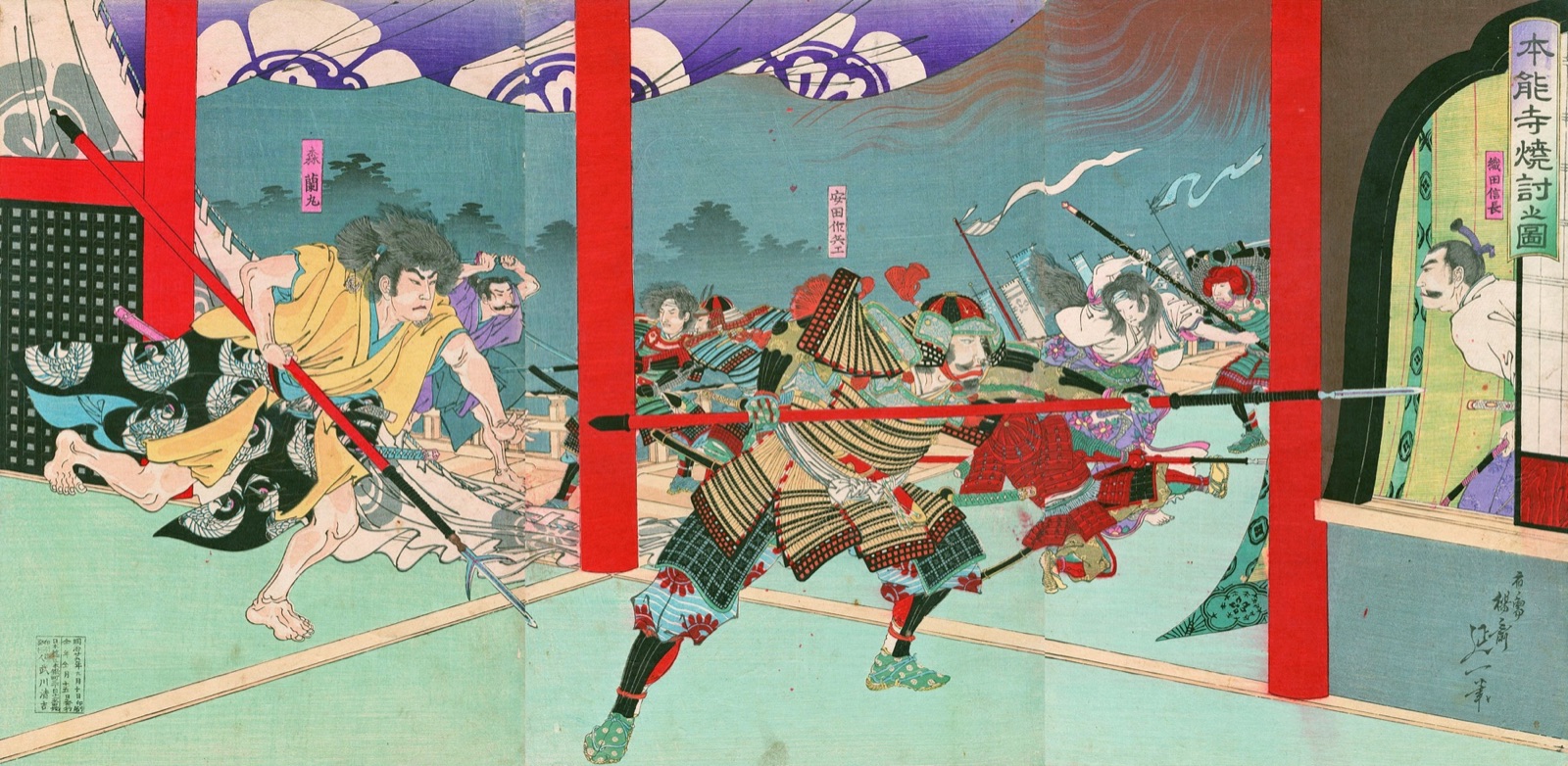
Separate the scene of the 1582 attack from the temple that bears the name today.The Honnoji attacked by Akechi Mitsuhide in 1582 stood near Shijo and Nishinotoin, not on the present temple grounds at Teramachi and Oike. Visit the original-site marker first, then the current Honnoji. Treating the incident as an event spread across streets, residences and routes through Kyoto is more revealing than reducing it to a single monument.
Kiyamachi, Suya and the Takase River
End among the merchant routes, domain residences and activists of late Tokugawa Kyoto.The Takase River corridor connected transport, commerce and political networks. Sites associated with Tosa and Choshu activists survive around Kiyamachi, including Suya, linked to Sakamoto Ryoma’s Kaientai. Because the precise location of some famous meetings remains debated, use the markers as entry points into Kyoto’s political geography rather than as unquestionable proof.
BOOKING OPTIONS / AFFILIATE
Cover more ground, or go deeper with a guide
The Klook option is a 10–11 hour group tour from Osaka or Kyoto covering Nijo Castle, Kinkaku-ji, Arashiyama and Fushimi Inari. The Viator option is a roughly three-hour small-group walk through Kyoto Imperial Palace and Nijo Castle. Neither follows this page’s full self-guided route.QUESTIONS BEFORE THE TRIP
Before walking through Kyoto history
Plan around separate locations, palace closures and the difference between the 1582 Honnoji site and the present temple.01What if I only have half a day in Kyoto?
Our suggested shorter route is Kyoto Imperial Palace followed by Nijo Castle, leaving out the Heian Palace detour, Honnoji and Kiyamachi. Allow around four to five hours including transfers and a break; this is a planning estimate, not a guaranteed duration. Check both opening calendars first, and reduce the plan to one major site if you want an unhurried visit.
02Is there free English guidance at Kyoto Imperial Palace?
Yes. The Imperial Household Agency offers free English guided tours and a free multilingual audio-guide app. Check the official visitor page for current departure times and joining conditions. A paid city tour is optional: compare its wider itinerary and personal commentary with the palace’s own service before booking. Palace visits do not include entry inside the buildings.
03Can I realistically visit all four areas in one day?
Yes, if you start around 9:00 and keep each visit focused. Kyoto Imperial Palace and the Heian Palace remains are separate places, so omit the Heian Palace detour if you want a longer palace visit. Allow roughly 90–120 minutes for Nijo Castle and work backward from its final admission time.
04Do I need a reservation for Kyoto Imperial Palace?
Walk-in admission is free and does not require prior arrangements. The palace normally closes on Mondays, or Tuesday when a national holiday falls on Monday, as well as over the year-end period. Security checks apply, and court functions or weather can cause unscheduled closure, so check the official calendar before setting out.
05What should I check before visiting Nijo Castle?
Check not only whether the castle grounds are open but also the current viewing schedule and ticket conditions for Ninomaru Palace and Honmaru Palace. Their closure days can differ. Honmaru Palace uses reserved admission; book through the official visitor page rather than assuming a general castle ticket includes entry. Limited same-day availability is not guaranteed. Allow time to walk from the castle entrance to Honmaru, and do not assume an affiliate tour includes it. Admission rules checked September 23, 2026; recheck before travel.
06Is the present Honnoji Temple where Oda Nobunaga died?
No. The 1582 attack took place at an earlier Honnoji site near Shijo and Nishinotoin. The present temple stands at Teramachi and Oike after a later relocation. Visiting both helps separate the historical scene from the institution that continued after the incident.
07Should I use this route or book a tour?
Choose the self-guided route to follow Kyoto’s political history in chronological order. Choose the Klook day tour if you want transport between widely separated highlights such as Arashiyama and Fushimi Inari. Choose the Viator walk for a shorter, focused visit to the Imperial Palace and Nijo Castle. Confirm language, meeting point, admissions and cancellation terms on the booking page.
BEFORE YOU GO
Check opening days and admissions at the source
Kyoto Imperial Palace allows free walk-in visits but has closure days and security checks. Nijo Castle’s palace viewing schedule can differ from the grounds. Recheck the official pages shortly before travel.READ THE PEOPLE