Azuchi–Momoyama period / ESSENTIAL EVENT
The Honnoji Incident
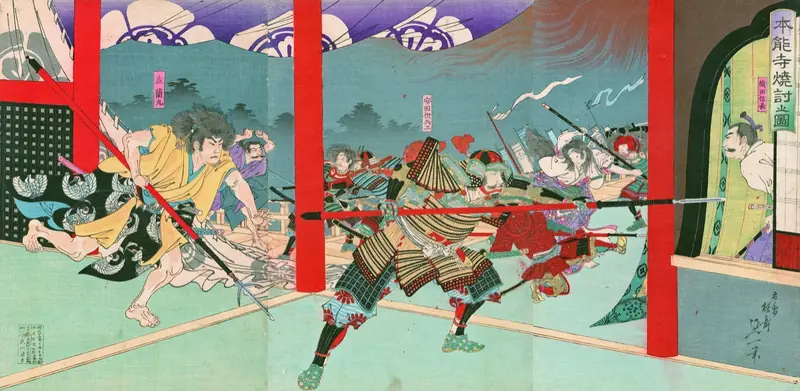
Oda Nobunaga died at Honnoji in Kyoto in 1582 after Akechi Mitsuhide rebelled and attacked the lightly guarded temple before dawn.- Historical place
- 山城国・京都
- People connected
- 4
Why did Akechi Mitsuhide betray Oda Nobunaga?
By 1582, Nobunaga’s armies dominated central Japan and were campaigning on several fronts. Nobunaga stayed at Honnoji in Kyoto with a small entourage, while Mitsuhide was expected to lead troops west in support of Hashiba Hideyoshi. Mitsuhide instead turned toward Kyoto. Historians continue to debate his motives because no conclusive contemporary statement explains the betrayal.
What happened at Honnoji in 1582?
Before dawn on the second day of the sixth month of Tenshō 10 (1582), Mitsuhide’s troops surrounded Honnoji. Nobunaga fought during the attack and died inside the burning temple complex. His body was not securely identified, so the exact manner of his death and the fate of his remains are uncertain. His heir Nobutada was then attacked at Nijo and also died.
What came next
Hideyoshi rapidly concluded peace with the Mori in western Japan, marched back toward Kyoto and defeated Mitsuhide at the Battle of Yamazaki. Mitsuhide’s rule lasted only days, while Hideyoshi’s speed gave him a decisive advantage in the struggle to inherit Nobunaga’s political position.
Why it still matters
The incident abruptly removed Nobunaga and his heir, changing who would continue the unification project without ending that project. The strongest historical explanation separates what is documented—the attack and its political consequences—from later theories that claim a single proven motive for Mitsuhide.
COMMON QUESTIONS
Questions about The Honnoji Incident
Short answers separate documented events from later assumptions and familiar legends.Why did Akechi Mitsuhide betray Oda Nobunaga?
No single motive has been proved. Contemporary and near-contemporary records establish Mitsuhide’s attack, but no surviving statement by Mitsuhide explains why he turned on Nobunaga. Historians therefore compare ambition, a sudden military opportunity, personal and political grievances, and policy disputes such as relations with the Chosokabe in Shikoku. Claims that the court, Hideyoshi or another hidden sponsor ordered the attack remain unproven.
Did Oda Nobunaga die by suicide at Honnoji?
The standard account, based largely on Ota Gyuichi’s Shinchō kōki, says Nobunaga fought during the attack and then withdrew into the temple as it burned. No surviving account establishes his exact final moments with certainty, and his remains were not conclusively identified. It is reasonable to say that he died during the attack, but not to claim that the precise manner of death or the later fate of his body is known.
Is today’s Honnoji Temple the place where Nobunaga died?
No. The temple attacked in 1582 stood near Shijo and Nishinotoin, within an area bounded by Rokkaku, Takoyakushi, Nishinotoin and Aburanokoji. A Kyoto City marker identifies the former site. Toyotomi Hideyoshi later ordered Honnoji to move to its present location at Teramachi and Oike, so the original-site marker and the present temple are separate stops.
What happened after the Honnoji Incident?
Mitsuhide also attacked Nobunaga’s heir, Oda Nobutada, who died at Nijo. Hashiba Hideyoshi then made peace with the Mori forces in western Japan, hurried back toward Kyoto and defeated Mitsuhide at the Battle of Yamazaki eleven days after the incident. Removing Nobunaga did not end the unification project; it opened a succession struggle in which Hideyoshi quickly gained the strongest position.
PLACE
Read the landscape
The present Honnoji temple is not on the site attacked in 1582. Toyotomi Hideyoshi later moved it east; a Kyoto City marker identifies the original site, which can be paired with the modern temple and nearby Sengoku-period sites on a historical walk.
Open the historical location on a map ↗PEOPLE
People in this story
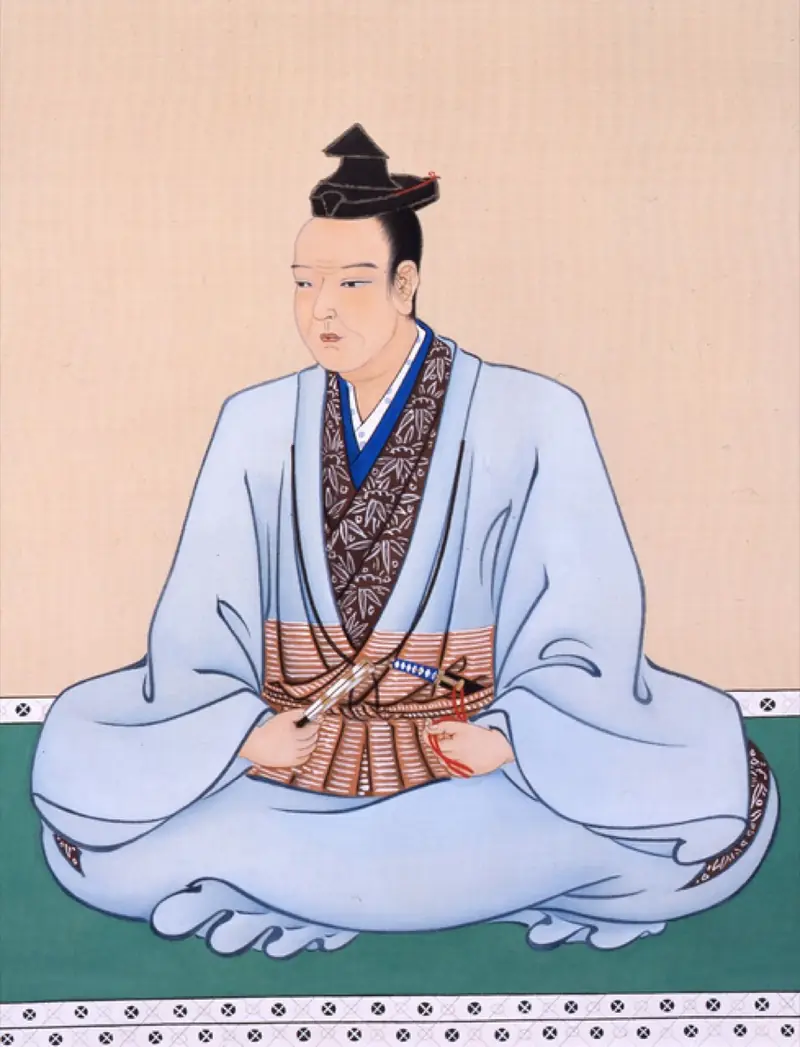
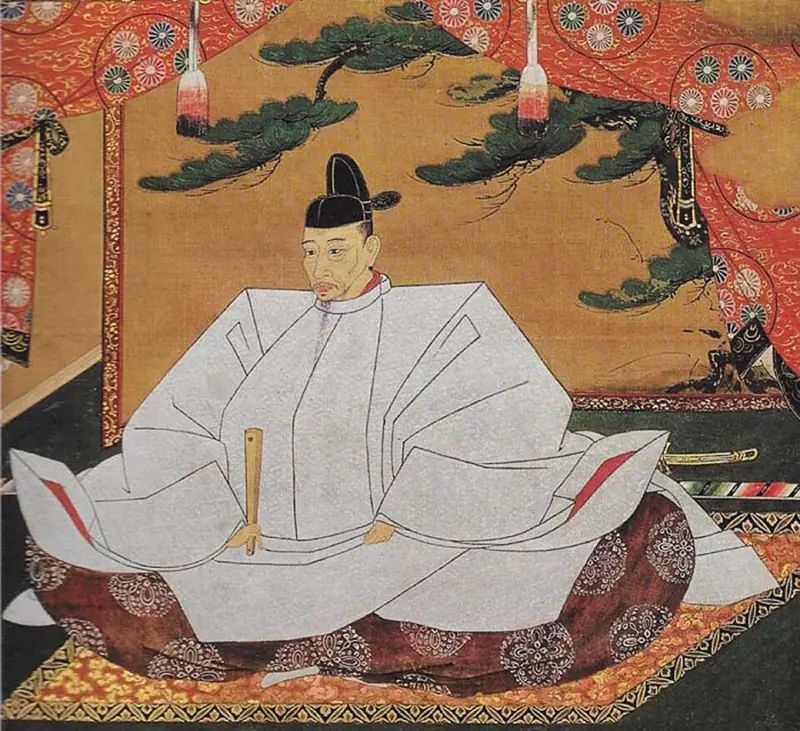
Person profiles are currently available in Japanese.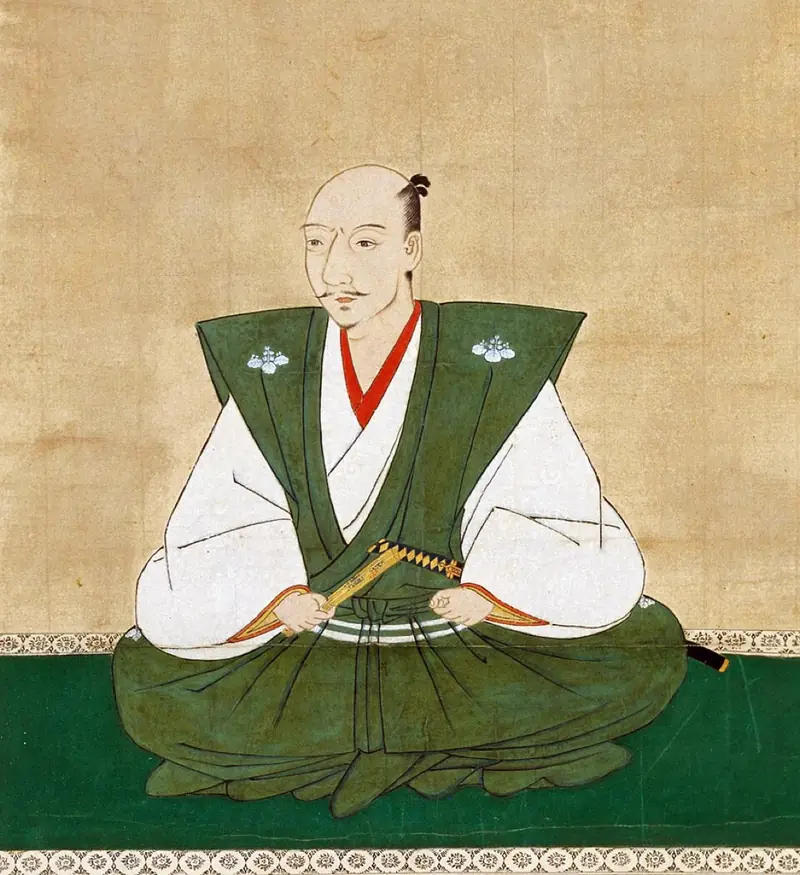
SOURCES
Evidence and further reading
Source titles and descriptions are shown in Japanese so you can identify the original institutional page.