BIOGRAPHY / EVIDENCE & LEGEND
Hijikata Toshizo
1835–1869 · Vice-commander of the ShinsengumiHijikata Toshizo was the vice-commander of the Shinsengumi, a group that policed Kyoto in support of the Tokugawa order during its final years. Born into a farming family, he entered a world of swordsmanship, political policing and civil war. He died fighting in Hakodate in 1869. His story connects the streets of Kyoto with the collapse of the shogunate, but it is more than the legend of a doomed swordsman.
What was the Shinsengumi? ↓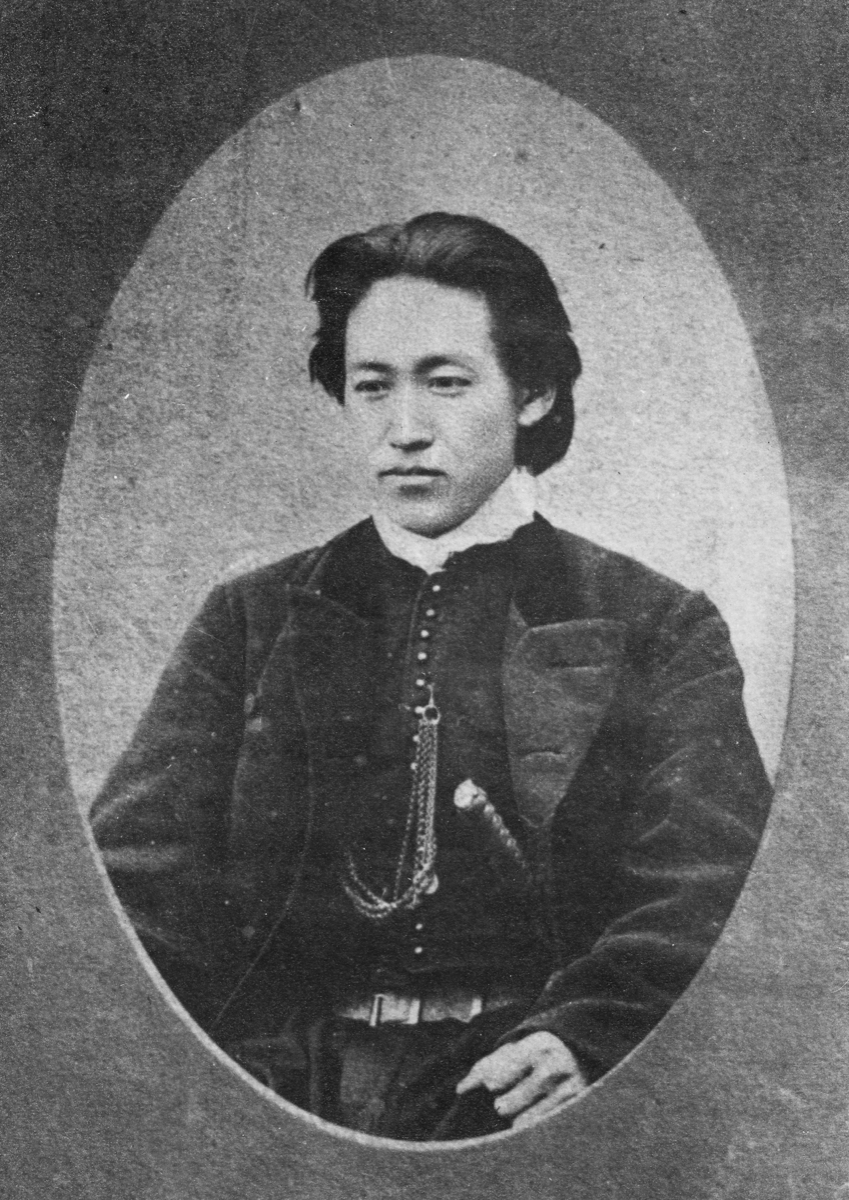
Hijikata’s life at a glance
- 1835
Born in the Tama region, in what is now Tokyo.
- 1863
Joined the escort assembled for the shogun’s journey to Kyoto; stayed there with Kondo Isami and others.
- 1864
The Ikedaya Incident brought the Shinsengumi wider recognition.
- 1865
The Shinsengumi moved its headquarters from Mibu to Nishi Hongwanji.
- 1867
Hijikata became a shogunate retainer, shortly before the old political order collapsed.
- 1868
After Toba–Fushimi, fought through Utsunomiya and Aizu before the final northern campaign.
- 1869
Killed in Hakodate on June 20 in the Gregorian calendar, corresponding to the fifth month’s eleventh day in the Japanese calendar.
Before Kyoto: a network of teachers and supporters
Hijikata’s origins were rural, not those of a hereditary domain lord. Training in Tennen Rishin-ryu connected him with the circle around Kondo Isami. These relationships help explain how men from the Tama and Edo area later acted together in Kyoto.
Hino’s municipal history museum places the Shinsengumi within this local society. Its materials include letters, Sato Hikogoro’s diary and Soma Kazue’s later recollections. Hikogoro was both a relative of Hijikata and a supporter of the group. Looking at these connections gives a fuller picture than imagining an isolated young swordsman following a predetermined destiny.
What was the Shinsengumi, and whose side was it on?
In 1863, Hijikata joined the men recruited to escort Shogun Tokugawa Iemochi to Kyoto. Some remained when the larger group returned to Edo. Under Matsudaira Katamori, the Aizu lord responsible for Kyoto’s security, the remaining organisation became the Shinsengumi. Kondo Isami became its commander and Hijikata its vice-commander.
The group supported the shogunate’s order. It was not a politically neutral police service in the modern sense. Kyoto was the emperor’s city and a centre of conflict over the country’s future; enforcing security there also meant taking a side in that struggle. Calling the Shinsengumi either pure heroes or simple villains removes that context.
Kyoto headquarters and the Ikedaya Incident
Mibu was an early base, with members lodging in local houses. The Ikedaya Incident in 1864 made the Shinsengumi widely known. In 1865 it moved its headquarters to Nishi Hongwanji. These changes show an organisation growing beyond a small circle of companions.
Familiar stories focus on the swords drawn during a raid. The addresses of headquarters reveal another side: armed men needed accommodation, supplies and relationships with the city around them. A surviving house or a commemorative marker can establish a connection with the group without proving every dramatic scene attached to it.
Sources: [3]
The person behind the uniform
An 1864 letter to supporter Kojima Shikanosuke survives in Sendai City Museum. Its discussion of correspondence and news from Kyoto is evidence of a person maintaining relationships, not merely a character defined by combat. The museum’s catalogue provides a route back to the document; the text and its historical setting matter more than an invented inner monologue.
His well-known photograph is another kind of evidence. The catalogue available through the National Diet Library identifies a photograph taken by Tamoto Kenzo in Hakodate and preserved through the Sato family. A photograph records an appearance at a particular moment. It cannot tell us, by itself, why he continued fighting or what he thought about defeat.
From Kyoto policing to the Boshin War
The Boshin War began with the fighting at Toba–Fushimi in 1868. Forces of the new government advanced under imperial authority, while resistance continued through northern Japan. Hijikata fought at Utsunomiya and Aizu before the struggle reached Hakodate. This was no longer simply the work of a Kyoto security organisation.
The war cannot be explained as swords against inevitable modernity. Military organisation, regional alliances and rival claims to legitimate rule mattered. The National Archives preserves evidence such as military flags and photographs of the damaged Aizu castle, reminding us that political transition brought destruction as well as institutional change.
The fall of Goryokaku in 1869 marked the end of the war. Describing the Meiji Restoration as one peaceful transfer of power leaves out the people who fought, resisted or suffered during this extended conflict.
How did Hijikata die?
Hijikata was killed by gunfire during the fighting in Hakodate. His death is dated June 20, 1869 in the Gregorian calendar. Japanese accounts also give Meiji 2, fifth month, eleventh day; that is not May 11 in the modern calendar.
The memorial near the former Ippongi barrier belongs to the geography of his final campaign. Accounts of the exact spot and the movement of his remains include traditions that should not be treated as a securely identified burial site. Hakodate’s official walking feature itself includes a guide’s reconstructions of his route and burial stories. These are useful for understanding local memory, but are not an eyewitness transcript.
Following the history in Hino, Kyoto and Hakodate
Hino is a starting point for documents and the community that supported the Shinsengumi. Kyoto’s Mibu area connects with its early headquarters. Hakodate’s Goryokaku and memorial landscape relate to the final campaign. They represent different chapters, not stops that can sensibly be combined into a single day.
For Kyoto, our linked history guide covers the Imperial Palace, Nijo Castle and Honnoji to explain the city’s wider political history. It is not a dedicated Shinsengumi route and does not promise a Mibu stop. Use the official Mibu source below to plan that separate visit, and check each property’s current access arrangements before travelling.
COMMON QUESTIONS
Questions about Hijikata
Was Hijikata Toshizo a real person?
Yes. Historical records, correspondence and photographs document him. Fictional versions should be distinguished from evidence about his life.
Was Hijikata the leader of the Shinsengumi?
He was its vice-commander. Kondo Isami was the commander; treating their positions as identical obscures how the organisation worked.
Did the Shinsengumi support the Meiji government?
The group served the Tokugawa order in Kyoto. Hijikata subsequently fought on the former shogunate side against the new government during the Boshin War.
When and where did Hijikata Toshizo die?
He died in the fighting at Hakodate on June 20, 1869 in the Gregorian calendar. The traditional Japanese date is Meiji 2, fifth month, eleventh day; the precise death site should not be inferred solely from a later memorial.
SOURCES