BIOGRAPHY / EVIDENCE & LEGEND
Toyotomi Hideyoshi
1536 or 1537–1598 · Unifier of Japan and imperial regentToyotomi Hideyoshi rose in Oda Nobunaga’s service and brought Japan’s principal daimyo under his authority by 1590. He ruled through military force, negotiation and the court office of kampaku, or regent, rather than as shogun. Land administration and city-building were part of his achievement. His invasions of Korea and the destruction of his adopted heir’s household were part of his rule too, not footnotes to a harmless rags-to-riches story.
What happened to his adopted heir? ↓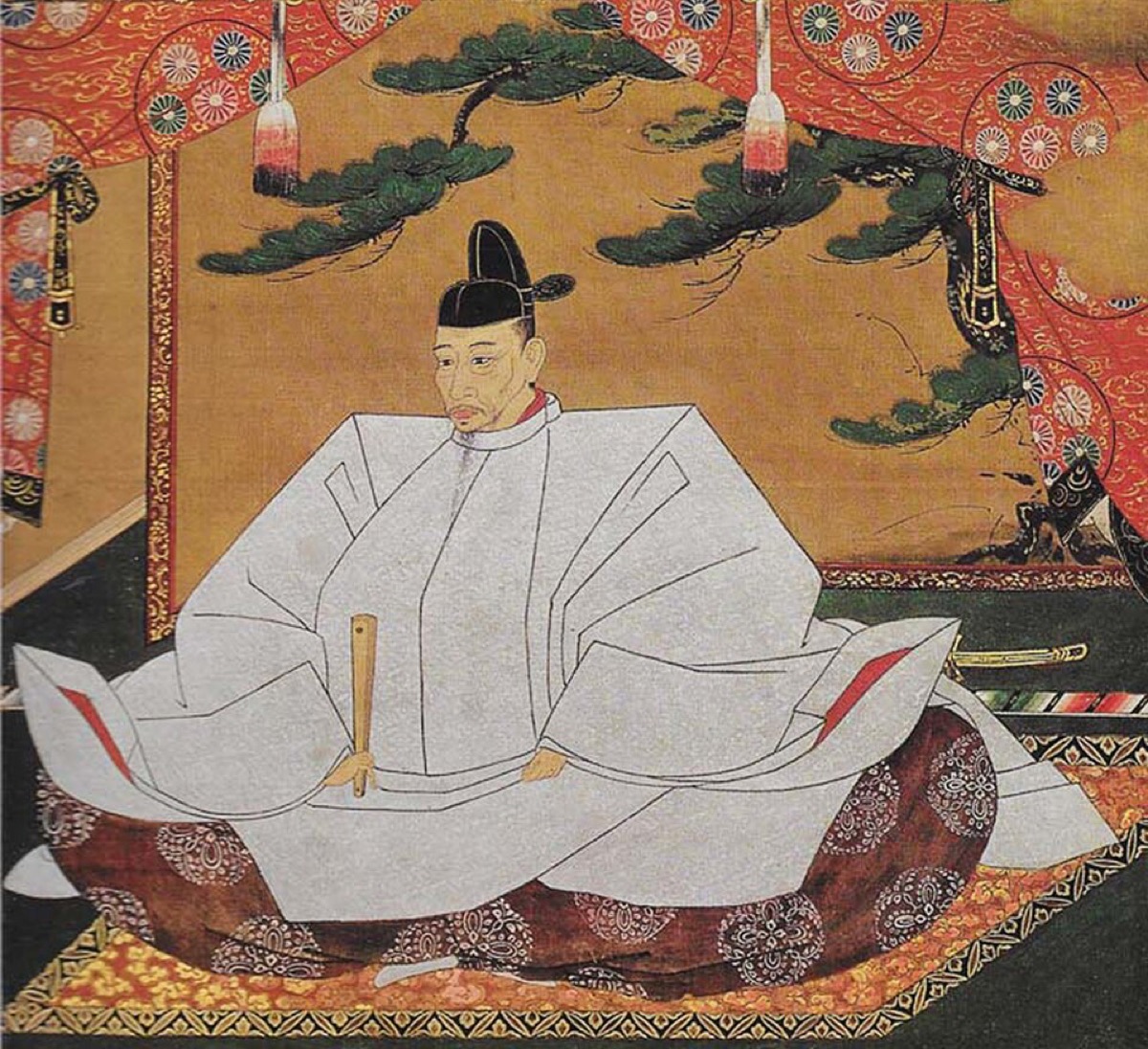
Hideyoshi’s life at a glance
- 1536 or 1537
Born in Owari. Nagoya City Museum notes evidence for both birth years; details of his early life remain uncertain.
- 1560s–1570s
Rose in Nobunaga’s service, appearing in documents as Kinoshita and then Hashiba Hideyoshi.
- 1582
Defeated Akechi Mitsuhide at Yamazaki after Nobunaga’s death and became a leading contender for supremacy.
- 1585
Appointed kampaku, using an imperial court office to support his political authority.
- 1588–1590
Issued the sword-hunt order and completed the submission of the principal daimyo, conventionally marking national unification in 1590.
- 1591–1595
Transferred the regency to his nephew and adopted heir Hidetsugu, then eliminated him after the birth of Hideyori.
- 1592 and 1597
Launched two invasions of Korea in pursuit of expansion toward Ming China.
- 1598
Died, leaving the young Hideyori and an unstable balance among powerful lords.
From uncertain beginnings to Nobunaga’s commander
Hideyoshi’s rise from a modest background was exceptional, but familiar childhood adventures should not be treated as a complete documented biography. Even his birth year is disputed: Nagoya City Museum recognises evidence for both 1536 and 1537.
His surviving documents offer firmer ground than colourful anecdotes. Changes from Kinoshita to Hashiba and in the titles and seals used on orders help researchers date his career. The museum explains that letters, grants and military instructions reveal the administration behind his ascent. The historical Hideyoshi was a commander and organiser, not simply a man whose charm won every encounter.
Sources: [1]
After Nobunaga: unification without becoming shogun
Following Nobunaga’s death, Hideyoshi defeated Mitsuhide at Yamazaki and competed for control of the former Oda coalition. His eventual supremacy was not automatic inheritance. It required overcoming rivals and securing the submission of major lords.
He became kampaku in 1585, an imperial regent, not emperor or shogun. Nagoya City Museum preserves the appointment document among the Toyotomi family papers. Military command and court legitimacy were compatible sources of power: explaining his rule merely as a failed attempt to become shogun misses the authority he actually acquired.
By 1590, the principal daimyo were subject to his settlement. Unification meant an overarching political order with territorial lords beneath it, not the immediate abolition of domains or the creation of a modern centralised nation-state.
Land surveys, the sword hunt and rule by documents
Hideyoshi’s land surveys made assessed agricultural production a basis for taxation and the obligations of lords. His government also issued the 1588 sword-hunt order, requiring the collection of weapons from farmers. Together these policies strengthened the distinction between those who cultivated land and those authorised to bear arms in military service.
An order and its implementation are not the same thing. The sword hunt should not be read as proof that every rural weapon disappeared overnight, or that all later social categories were instantly fixed. The National Diet Library’s reference entry points readers to the text transmitted in the Kobayakawa documents; examining the order is a better starting point than a sweeping slogan about complete disarmament.
His adopted heir Hidetsugu and the punishment of a family
Hideyoshi’s nephew Hidetsugu became his adopted heir and succeeded him as kampaku. The birth of Hideyoshi’s son Hideyori in 1593 changed the succession problem: an adult regent and a young biological son now occupied very different positions in the ruling family.
In 1595 Hidetsugu was driven to suicide. His wives, children and other members of his circle were then executed at Kyoto’s Sanjo riverbank. Kyoto National Museum describes this sequence in its exhibition on Hidetsugu and Zuisenji, the temple later established at the execution site to commemorate the family.
This was not merely a change of successor. Punishment extended to women and children, making the violence of the succession settlement central to an assessment of Hideyoshi. Allegations against Hidetsugu should not be repeated as a proven explanation that makes the killing of his household inevitable or justified.
Sources: [5]
The invasions of Korea were not a successful continuation of unification
Hideyoshi launched invasions of Korea in 1592 and 1597, with ambitions extending to Ming China. Korean resistance and Ming intervention made this an international war, not simply another domestic campaign against a rival daimyo. The invasions caused devastating destruction and suffering in Korea and imposed major demands on the forces sent from Japan.
Kyushu National Museum places the war within Asian diplomacy, displaying documents exchanged between the governments involved. The Japanese terms Bunroku and Keicho campaigns identify eras, but do not adequately explain the experience of the people invaded. This article uses invasions of Korea and notes the wider name Imjin War. The fighting did not deliver Hideyoshi’s intended continental conquest.
Death, Hideyori and the limits of his settlement
Hideyoshi died in 1598. The order he left depended on cooperation among powerful men while his son was still a child. Ieyasu’s victory at Sekigahara in 1600 and appointment as shogun in 1603 were subsequent changes in that balance, not events Hideyoshi lived to direct.
The Toyotomi household survived until the Osaka campaigns of 1614–1615. Separating those dates prevents two common confusions: Hideyoshi did not fight Ieyasu at Sekigahara, and the family did not disappear immediately when Hideyoshi died. Read Ieyasu’s biography for the next phase rather than folding three different rulers into one uninterrupted life.
Sources: [7]
Osaka Castle: distinguish Hideyoshi’s remains from later buildings
The castle seen in Osaka today contains several historical layers. Hideyoshi’s castle was followed by Tokugawa rebuilding; the present main tower is a twentieth-century reconstruction. The Toyotomi Stone Wall Museum interprets buried masonry from the earlier castle, making the distinction visible rather than merely a matter of names.
For Kyoto, our linked guide explains the wider political landscape and the two Honnoji locations. It is not a dedicated Hideyoshi itinerary and does not promise visits to Osaka Castle or Zuisenji. Use the official castle source for a separate Osaka visit, and check current access before travelling. Learning about the ruler should clarify what a site represents, not lead to a booking for an unrelated route.
COMMON QUESTIONS
Questions about Hideyoshi
Was Toyotomi Hideyoshi a shogun?
No. He became kampaku, an imperial regent, in 1585. He exercised nationwide power through military supremacy, political settlements and court authority.
Was Hideyoshi born in 1536 or 1537?
Both dates have supporting arguments. Nagoya City Museum explicitly notes the uncertainty, so this biography does not treat one year as conclusively established.
What happened to Hideyoshi’s adopted heir?
His nephew and adopted heir Hidetsugu was driven to suicide in 1595. Hidetsugu’s wives, children and other relatives were subsequently executed in Kyoto.
Did Hideyoshi invade Korea?
Yes. He launched invasions in 1592 and 1597 as part of ambitions toward Ming China. The war brought devastation to Korea and did not achieve the intended continental conquest.
Did Hideyoshi fight at Sekigahara?
No. He died in 1598, two years before the battle. His son Hideyori’s household remained at Osaka until its defeat in 1615.
SOURCES