BIOGRAPHY / EVIDENCE & LEGEND
Tokugawa Ieyasu
1543–1616 · Founder of the Tokugawa shogunateTokugawa Ieyasu founded the Tokugawa shogunate, the warrior government based in Edo, now Tokyo. His victory at Sekigahara in 1600, appointment as shogun in 1603 and defeat of the Toyotomi at Osaka in 1615 were separate steps toward supremacy. He was not Japan’s emperor, and his rise was neither an uninterrupted series of victories nor simply a matter of waiting for rivals to die.
How did Ieyasu become shogun? ↓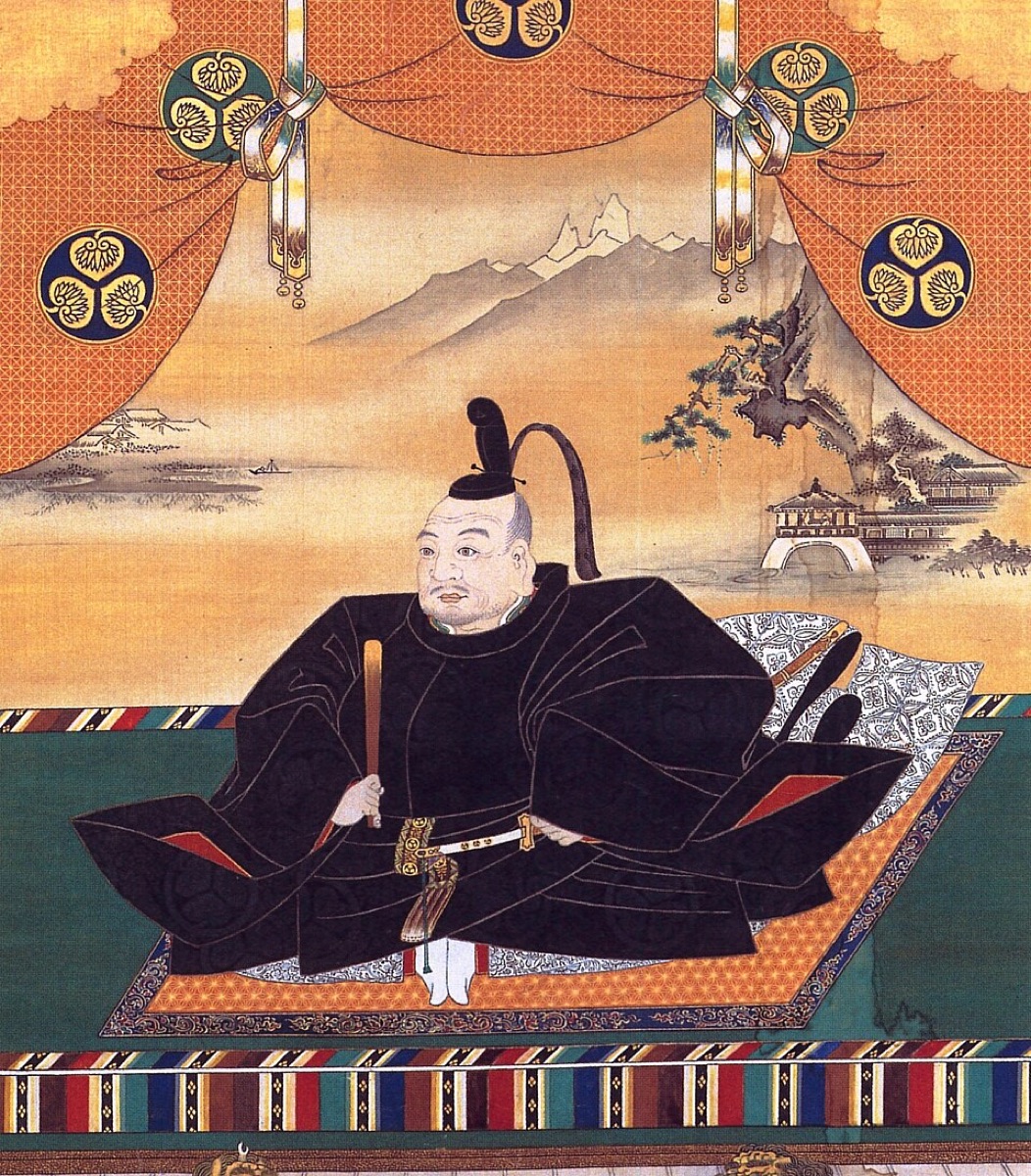
Ieyasu’s life at a glance
- 1543
Born at Okazaki as Matsudaira Takechiyo. Japanese accounts often use 1542, reflecting the traditional calendar.
- Childhood
Spent years as a hostage among the Oda and Imagawa, within the struggles of regional warrior families.
- 1560–1575
Returned to Okazaki after Okehazama and later fought alongside Nobunaga; a severe defeat at Mikatagahara interrupted his rise.
- 1584–1586
Fought Hideyoshi in the Komaki–Nagakute campaign, then acknowledged his supremacy in 1586.
- 1590
Transferred to the Kanto region under Hideyoshi and established his base at Edo.
- 1600
Led the victorious eastern coalition at Sekigahara.
- 1603–1605
Became shogun, then passed the office to his son Hidetada while retaining political power.
- 1614–1615
The Osaka campaigns ended the power of Toyotomi Hideyori and his household.
- 1616
Died; his commemoration at Toshogu shrines became part of the Tokugawa legacy.
From a hostage childhood to a powerful lord
Ieyasu was born into the Matsudaira family at Okazaki in Mikawa, in present-day Aichi Prefecture. His childhood name was Takechiyo. The family’s position between stronger neighbours shaped his early life: he spent years as a hostage first with the Oda and then with the Imagawa. A hostage in this setting was a guarantee of political allegiance, not a modern prisoner of war.
The traditional date of his birth falls in the twelfth month of Tenbun 11, labelled 1542 in Japanese chronology. This article uses the Gregorian year 1543. Different calendar conventions explain the apparent disagreement; it does not necessarily mean that two biographies describe different events.
After Imagawa Yoshimoto was killed at Okehazama in 1560, he returned to Okazaki and built an independent position. He later fought alongside Nobunaga at Anegawa and Nagashino. Between those victories came a severe defeat by the Takeda at Mikatagahara. His eventual supremacy should not make these years look like a predetermined march to success.
Why did he submit to Toyotomi Hideyoshi?
After Oda Nobunaga’s death, Ieyasu was a formidable regional power but not the sole candidate to dominate Japan. In 1584 he supported Nobunaga’s son Nobukatsu against Hideyoshi in the Komaki–Nagakute campaign. Battlefield success did not settle the wider political contest: the eventual settlement favoured Hideyoshi.
In 1586 Ieyasu acknowledged Hideyoshi’s supremacy. Marriage diplomacy and negotiations helped bring this about. In 1590 Hideyoshi ordered his transfer to the Kanto region, where Edo became his base. Reading this move only as punishment or only as a lucky gift misses its practical consequence: Ieyasu had to establish his authority in a new territorial setting.
1600: Sekigahara was not the founding of the shogunate
Hideyoshi’s death in 1598 left his young heir Hideyori within a fragile political settlement. Ieyasu was one of its senior lords. The conflict that followed grew out of competition within that order, rather than a simple war between two already separate national governments.
At Sekigahara in 1600, Ieyasu’s eastern coalition defeated the opposing western coalition associated with Ishida Mitsunari and its nominal leader Mori Terumoto. Victory established his predominance, but it did not instantly abolish the Toyotomi household. The distinction matters: Hideyori remained a powerful presence at Osaka after Ieyasu became shogun.
1603: shogun, emperor and the succession
Ieyasu received the title of shogun in 1603 and established his warrior government at Edo. A shogun was not an emperor: the imperial court continued to exist, while the shogunate exercised military and political authority. Appointment to the office placed Ieyasu above his former position as a senior figure in the Toyotomi administration.
In 1605 he transferred the shogunate to his son Tokugawa Hidetada. This demonstrated that the office would pass within the Tokugawa family. Retirement from the title did not mean withdrawal from government: Ieyasu remained influential, later based at Sunpu, today’s Shizuoka. His career therefore cannot be understood by counting only his two years as the serving shogun.
1615: Osaka and the cost of consolidation
Family ties had not removed the rivalry. Hideyori married Ieyasu’s granddaughter Senhime in 1603, yet the Toyotomi household remained an alternative focus of authority. The Osaka winter campaign in 1614 ended in a settlement, not a permanent reconciliation.
War resumed in 1615. The Tokugawa forces prevailed, and Hideyori and his mother Yodo-dono died. This was the destruction of a rival household through warfare, not a peaceful handover. Laws governing warrior houses and the imperial court followed that year. The durable order associated with the Tokugawa depended on force and regulation as well as diplomacy.
Beyond the patient strategist: trade, death and memory
The founder should not be reduced to the idea of an isolated Japan. Ieyasu regulated overseas trade through red-seal permits and correspondence with Asian rulers. Such documents reveal an active concern with commerce and foreign relations. The institutions of the Edo period developed over time; they were not all completed in a single founding act.
He died in 1616. A popular story links his illness to a sea-bream dish, but an anecdote about what he ate is not a medically established cause of death. The National Archives presents records and competing explanations rather than a modern diagnosis.
Kunozan Toshogu in Shizuoka commemorates his burial and enshrinement; Hidetada ordered the shrine’s construction. Its English account is useful for the shrine’s history, while its praise of Ieyasu also reflects its religious and commemorative role. A shrine’s interpretation and a contemporary political record answer different historical questions.
Where can you see his legacy in Tokyo?
The Edo Castle site offers a starting point in modern Tokyo. Its moats, stonework and the surviving castle landscape help explain why Edo mattered to the shogunate. The site is now associated with the Imperial Palace: that later use should not be confused with Ieyasu having ruled as emperor.
Start with the castle landscape, then use our Edo–Tokyo history itinerary below to connect places into a visit. A present-day walk is not a reconstruction of a single year in Ieyasu’s lifetime. Check official access information before travelling, and distinguish surviving remains from later buildings and reconstructions.
Sources: [10]
COMMON QUESTIONS
Questions about Ieyasu
What is Tokugawa Ieyasu famous for?
He founded the Tokugawa shogunate at Edo in 1603. Sekigahara in 1600 established his military predominance; the Osaka campaigns in 1614–1615 removed the rival Toyotomi household.
Was Tokugawa Ieyasu an emperor?
No. He was a shogun, the head of a warrior government. The imperial court remained a separate institution; the titles shogun and emperor are not interchangeable.
Why did Ieyasu retire in 1605?
Passing the office to Hidetada established Tokugawa family succession. Ieyasu continued to exercise power after giving up the title, so this was not retirement from political life.
Was Ieyasu born in 1542 or 1543?
His traditional Japanese birth date belongs to Tenbun 11, conventionally labelled 1542, but falls in 1543 in the Gregorian calendar. This article uses 1543.
SOURCES