BIOGRAPHY / EVIDENCE & LEGEND
Empress Suiko
554–628 · Reigning empress during the Asuka period, 592–628Empress Suiko ruled from 592 to 628, during the Asuka period. She is recognised as Japan’s first historically attested reigning empress: a sovereign in her own right, not simply an emperor’s wife. Her reign connects the growth of court government with Buddhism and exchanges across East Asia. Understanding her means looking beyond the familiar image of Prince Shotoku acting alone.
What changed during her reign? ↓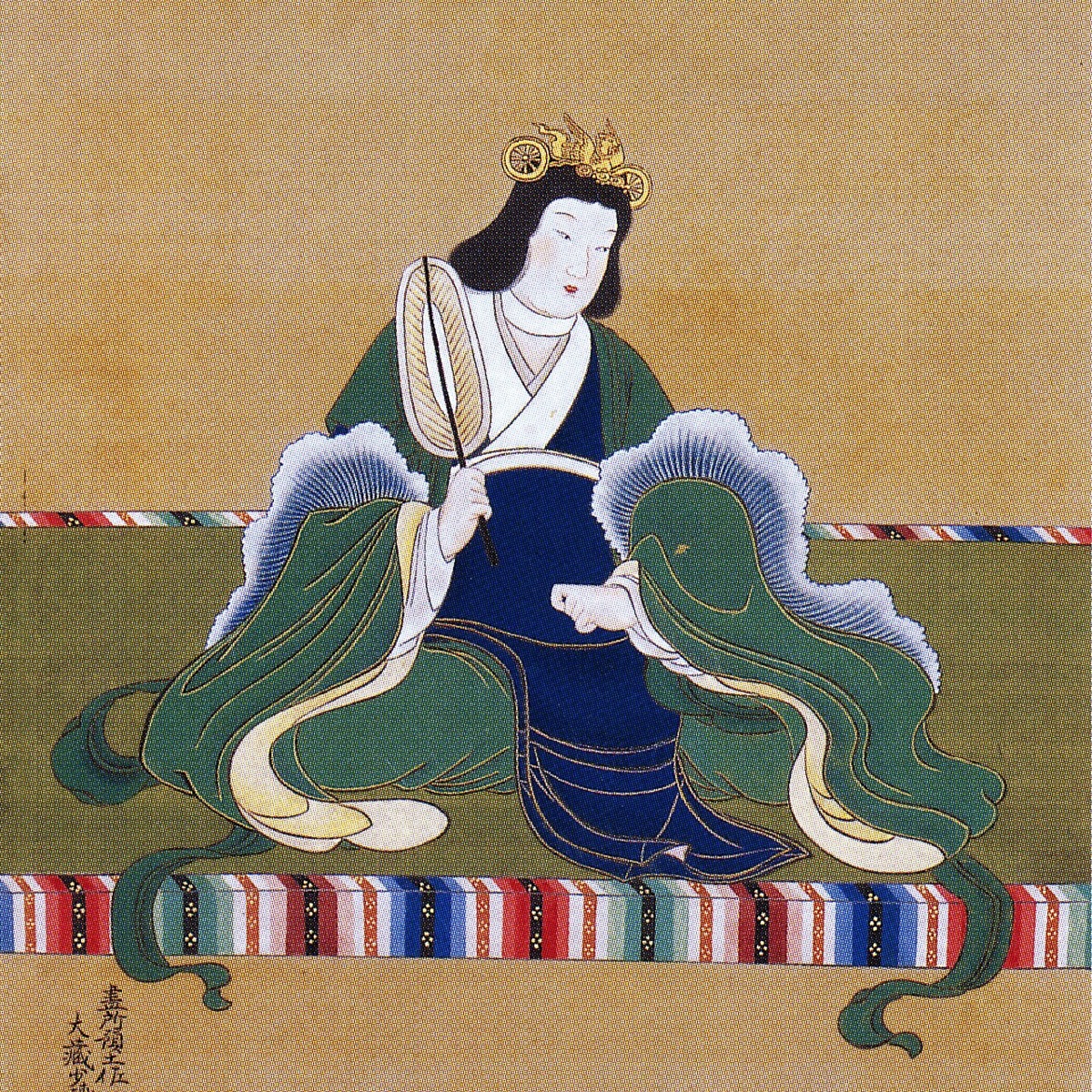
Suiko’s life at a glance
- 554
Born into the royal family as a daughter of Emperor Kinmei.
- 592
Acceded at Toyurano-miya after the assassination of Emperor Sushun.
- 603
The court moved to Oharidano-miya and introduced the twelve-level cap-rank system.
- 604
Traditional date assigned to the Seventeen-Article Constitution.
- 607–608
Ono no Imoko travelled to Sui China and returned with the envoy Pei Shiqing.
- 628
Suiko died, leaving the succession unresolved in the account of her final instructions.
A reigning empress, not just an empress consort
Before her accession, Suiko was known as Princess Nukatabe and had been the consort of Emperor Bidatsu. Following Sushun’s assassination, senior figures including Soga no Umako supported her accession at Toyurano-miya in 592. Her position changed from the spouse of a ruler to the ruler herself.
The distinction matters in English because the word empress can describe either role. Calling Suiko the first reigning empress refers to the recognised imperial succession; it does not mean that no woman had exercised political or religious authority in the archipelago before her.
Sources: [1]
Suiko, Prince Shotoku and Soga no Umako
The prince usually called Shotoku is also known as Umayado. He and the powerful Soga leader Umako were important figures in Suiko’s court. Policies associated with the prince belonged to a reign involving the sovereign, royal relatives, leading families and officials, rather than to one isolated reformer.
The twelve-level cap-rank system of 603 distinguished officials through ranked headgear. It offered a way of recognising individual position alongside inherited family status. This should not be confused with a modern open civil service or a sudden end to the influence of powerful clans.
Sources: [2]
Was the Seventeen-Article Constitution a modern constitution?
No. Traditionally dated to 604 and associated with Shotoku, it set out principles of conduct for those serving the court. Its concerns included harmony, religious respect and the behaviour expected of officials. The familiar English title can mislead readers expecting a modern document defining democratic institutions or individual rights.
Its historical setting is the strengthening of court authority. It is useful to ask what kind of political behaviour the text advocated, without assuming that every instruction was immediately obeyed throughout the country.
Envoys to Sui China and learning across borders
Ono no Imoko’s mission to Sui China in 607 and the arrival of Pei Shiqing in 608 placed Suiko’s court in direct exchange with a powerful continental dynasty. Monks and students accompanied these contacts, studying texts, institutions and religious practices. Diplomacy was therefore also a channel for learning.
The famous dispute over the wording of a diplomatic letter is only one part of this relationship. It should not crowd out the people, knowledge and continuing negotiations involved, nor be treated as a modern declaration of independence. The broader Asuka cultural world also depended on exchanges with kingdoms on the Korean Peninsula.
Buddhism and the changing landscape of Asuka
Buddhism was not first introduced by Suiko. Earlier contacts and competition among leading families preceded her reign. Under her court, temples and Buddhist learning became increasingly prominent, alongside cultural and technical exchange with the continent.
Asukadera is a tangible connection with this setting. The Japan Heritage account describes a substantial complex built during Suiko’s reign, with three main halls around its central sacred space. The original buildings were later lost to fires. A visit today connects with an ancient foundation, but it is not a walk through an untouched sixth-century complex.
Her final years and the limits of our evidence
The account of Suiko’s final instructions names two possible successors, Prince Tamura and Prince Yamashiro, but does not state an explicit choice between them. She died in 628. We should not supply a confident private preference where the account leaves one unstated.
Much of the narrative of this court reaches us through the Nihon Shoki, completed in 720. That is a later, imperially commissioned history, not a diary written by Suiko. Its importance and its distance from the events both matter. The much later portrait used here is likewise an act of representation, not a record of her appearance from life.
Where to explore Suiko’s history today
The Toyurano-miya Palace site is associated with Kogenji Temple in Asuka, Nara Prefecture. The heritage guide describes remains linked to the palace where she acceded. Treat these as archaeological remains and an interpreted site, not an intact royal residence.
Asukadera offers another connection to her period. Asuka is a different destination from the temples around central Nara’s park: allow for that geographical distinction when using our wider Nara guide. A tour of central Nara should not be assumed to include Asuka.
The mausoleum officially associated with Suiko is in Taishi, Osaka Prefecture, not in central Nara. Check the relevant local visitor information for access arrangements. The historical links on this page do not imply that burial chambers or every archaeological feature are open to visitors.
COMMON QUESTIONS
Questions about Suiko
Was Suiko Japan’s first female emperor?
She is recognised as the first historically attested reigning empress in Japan’s imperial succession. Here empress means a sovereign, not merely a ruler’s spouse.
Did Prince Shotoku rule instead of Suiko?
Shotoku was an important figure in her court, as was Soga no Umako. Describing the reign only through the prince leaves out the reigning sovereign and the wider political group.
Was the Seventeen-Article Constitution like a modern constitution?
No. It mainly set out moral and political conduct expected at court, rather than modern constitutional institutions and rights.
Did Suiko introduce Buddhism to Japan?
No. Buddhism had reached the court before her reign. Her period was important for its support and the development of temples.
Where are Suiko’s historic sites?
Toyurano-miya and Asukadera are in Asuka, Nara Prefecture. Her designated mausoleum is in Taishi, Osaka Prefecture. These are not all part of a central Nara walking route.
SOURCES