BIOGRAPHY / EVIDENCE & LEGEND
Date Masamune
1567–1636 · Regional warlord and first lord of SendaiDate Masamune was a daimyo—a territorial lord—who built a northern power base during Japan’s civil wars and became the first lord of Sendai. Remembered as the One-Eyed Dragon, he is associated with a crescent-crested helmet and an embassy to Europe. His lasting importance also lies in creating a castle town and adapting to rule under Hideyoshi and the Tokugawa, rather than becoming Japan’s national ruler.
Why did he send an embassy to Europe? ↓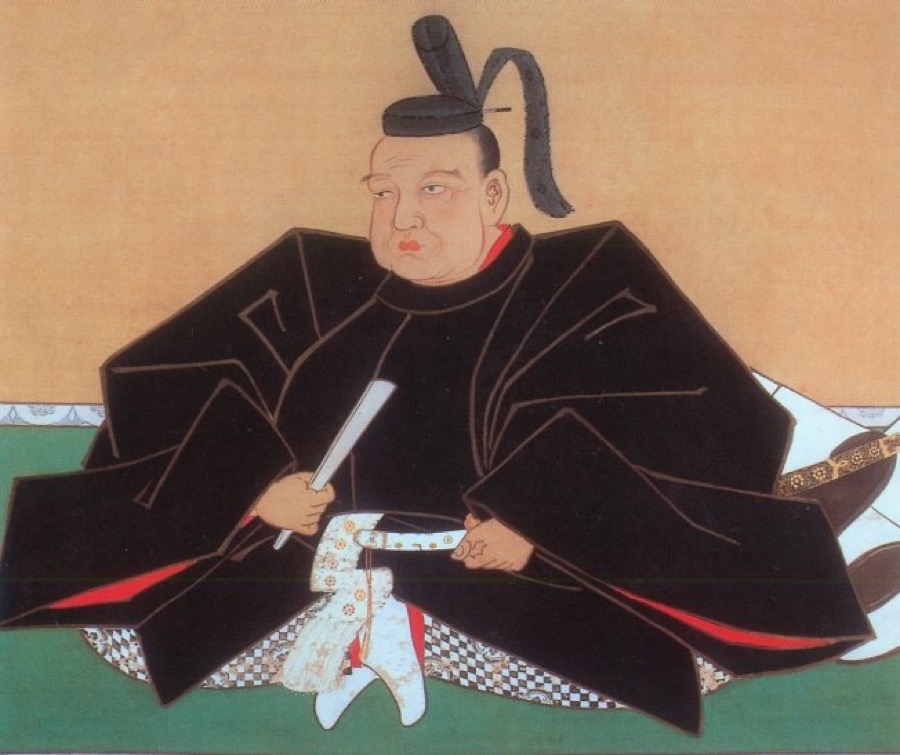
Masamune’s life at a glance
- 1567
Born at Yonezawa Castle, in present-day Yamagata Prefecture.
- 1584–1589
Succeeded his father as head of the Date family, then expanded into Aizu after defeating the Ashina.
- 1590–1591
Submitted to Hideyoshi at Odawara and subsequently moved his base to Iwadeyama.
- 1593
Landed at Busan as part of Hideyoshi’s invasion of Korea.
- 1600–1601
Began the Sendai castle project and moved into the still-unfinished castle in 1601.
- 1613
Dispatched Hasekura Tsunenaga’s embassy toward Mexico, Spain and Rome.
- 1620
Hasekura returned to Japan without securing the intended trade arrangement.
- 1636–1637
Masamune died in Edo in 1636; his son Tadamune built Zuihoden the following year.
From Yonezawa to a northern power base
Masamune came from Yonezawa, not from an already established Sendai domain. He inherited leadership in 1584 and confronted neighbouring families in southern Tohoku, the northeastern part of Japan’s main island. Victory over the Ashina at Suriagehara in 1589 brought him into Aizu.
This was not an uninterrupted series of battlefield triumphs. Sendai City Museum’s curator describes a mixture of defeats, draws, negotiation and recruiting supporters inside rival camps. That helps explain expansion more convincingly than the image of an invincible fighter.
Why he served Hideyoshi and then Ieyasu
Masamune’s regional expansion collided with Hideyoshi’s much wider authority. He submitted at Odawara in 1590 and lost territory including Aizu. His move to Iwadeyama in 1591 marked a changed position: he now had to operate within the Toyotomi political order, not simply enlarge his lands at will.
Service also brought participation in Hideyoshi’s invasion of Korea: the museum chronology records Masamune landing at Busan in 1593. This should not disappear behind admiration for his armour. After Hideyoshi’s death, Masamune supported Ieyasu; his military activity in the conflict of 1600 was in the north, rather than a personal appearance on the Sekigahara battlefield.
Building Sendai: more than a castle
The castle project began in 1600, but Masamune moved there in 1601 while construction continued. The museum dates completion of its grand hall to 1610. These are different milestones, so a single founding date should not imply that the whole city appeared at once.
Samurai and townspeople were moved from Iwadeyama, and nearby communities supplied labour. Agricultural development, works on the Kitakami River and the port at Ishinomaki connected rice production with transport toward Edo. This was the work of a domain and its inhabitants, not one man building a city alone.
Sources: [3]
The One-Eyed Dragon, eye patch and crescent helmet
Masamune lost sight in his right eye following childhood smallpox. Yet Sendai City’s curator notes that Edo-period portraits do not show the familiar eye patch. The nickname does not make every costume choice in films and games a documented part of his appearance.
The black-lacquered armour traditionally associated with him is a different kind of evidence: a surviving object. Its hinged breastplate has five sections, and the helmet bears a gilded leather crescent. The Agency for Cultural Affairs records the suit as an Important Cultural Property held by Sendai City Museum. Its association with Masamune does not identify every battle in which he wore it.
Hasekura’s embassy: across two oceans, but no trade agreement
Masamune did not travel to Europe himself. In 1613 he sent his retainer Hasekura Tsunenaga on the San Juan Bautista. The delegation crossed the Pacific to Mexico and continued across the Atlantic to Spain and Rome, where it received an audience with Pope Paul V.
The objectives included direct trade with Spanish-controlled Mexico and the dispatch of missionaries. They were not achieved: the negotiations did not secure the desired commitments, while restrictions on Christianity in Japan undermined the mission’s prospects. Hasekura returned in 1620. Reaching Europe was a substantial undertaking, but reaching a destination and achieving a policy are different outcomes.
Material evidence survives. The National Treasure collection of 47 mission-related objects includes Hasekura’s Roman citizenship document, portraits and Christian religious objects. These provide a firmer starting point than imagining a secret global conquest plan behind the voyage.
Letters and culture: the person behind the warrior image
Poetry, tea, Noh and other cultural pursuits were part of Masamune’s relationships with the shogunate, court and fellow lords. His letters range from instructions to affectionate family communication and apologies involving drinking. They show a person maintaining relationships, not only a character defined by a helmet.
Images also need dates. Kano Tanyu painted an armoured portrait during Masamune’s lifetime, whereas the seated portrait used at the top of this page is a later work. A historical portrait can tell us about commemoration as well as appearance; it should not be treated as a photograph.
Where to explore his history in Sendai
Sendai Castle is a historic site with remains and reconstructions, not an intact original palace. Read the landscape alongside the museum’s account of construction and excavation. Sendai City Museum is the principal starting point for the armour and embassy objects; consult its current exhibition information rather than assuming every collection item is permanently on display.
Zuihoden is Masamune’s mausoleum. Tadamune built the original in 1637, after his father’s death; it was destroyed in the Second World War, and the building seen today is a reconstruction. These places belong to a Sendai journey in Tohoku, not to a Kyoto or Osaka walking itinerary.
COMMON QUESTIONS
Questions about Masamune
What is Date Masamune famous for?
He founded the Sendai domain’s castle town, ruled through the transition to Tokugawa government and sent Hasekura Tsunenaga’s embassy overseas. His One-Eyed Dragon nickname and crescent-crested helmet are also widely recognised.
Did Date Masamune wear an eye patch?
He lost sight in his right eye, but the familiar eye-patch image is not shown in the Edo-period portraits discussed by Sendai City’s curator. Modern portrayals should not be treated as contemporary evidence.
Was Date Masamune a shogun?
No. He was a regional daimyo and the first lord of Sendai, not the head of Japan’s warrior government.
Did Masamune visit Europe?
No. Hasekura Tsunenaga travelled as his envoy. The embassy reached Spain and Rome, but did not achieve its intended trade arrangement.
Can you see his original armour?
Sendai City Museum holds black-lacquered armour traditionally associated with him. Check the museum’s current exhibition schedule; ownership of an object does not guarantee that it is on display during your visit.
SOURCES