BIOGRAPHY / EVIDENCE & LEGEND
Uesugi Kenshin
1530–1578 · Daimyo of Echigo and Kanto kanreiUesugi Kenshin was a daimyo—a territorial lord—of Echigo, now Niigata Prefecture on Japan’s Sea of Japan coast. Famous as Takeda Shingen’s rival, he also inherited an important regional office and maintained a powerful provincial base. His story connects civil war with religion, trade and the difficult question of who would inherit authority after his death.
Why did his name change? ↓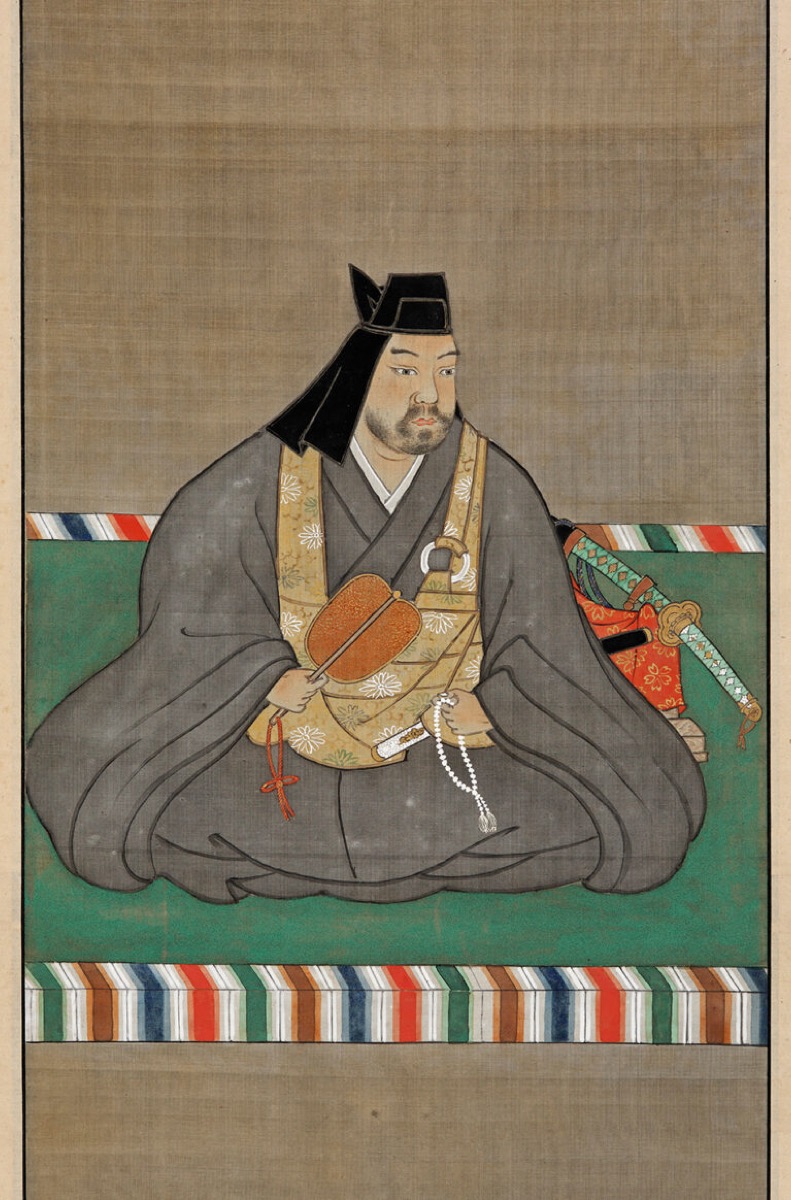
Kenshin’s life at a glance
- 1530
Born into the Nagao family of Echigo.
- 1548
Succeeded his brother and took control of Kasugayama Castle.
- 1553–1564
Repeated campaigns against Shingen in northern Shinano, remembered as the Kawanakajima battles.
- 1561
Inherited the Uesugi name and the office of Kanto kanrei.
- 1570
Began using the Buddhist name Kenshin.
- 1578
Died at Kasugayama; his adopted sons subsequently fought over the succession.
From Nagao Kagetora to Uesugi Kenshin
Kagetora, Masatora, Terutora and Kenshin are names used by the same man at different stages of his life. Born into the Nagao family, he succeeded his brother Harukage in 1548. In 1561, Uesugi Norimasa passed him the Uesugi family name and the office of Kanto kanrei, a regional deputy within the Ashikaga political order. Kenshin was a Buddhist name, used from 1570.
He was not a shogun. Inheriting an office connected him to an established claim to regional authority, but it did not make every neighbouring lord obey him. The changing names record changes in affiliation and religious identity, not a succession of unrelated commanders.
Sources: [1]
A provincial ruler, not simply a righteous warrior
Yonezawa City Uesugi Museum presents Kenshin’s rise through conflicts with warriors inside Echigo, the pursuit of recognised status and repeated campaigns outside the province. Its account challenges the idea that a perfectly united domain simply followed an invincible hero into battle.
That distinction also helps us read his later reputation for righteousness. A moral reputation is part of how a person is remembered; it is not enough to explain every political choice. The museum’s approach asks us to consider struggles over authority and control as well as the stories told about his character.
Sources: [2]
Why did he fight Takeda Shingen?
The conflict concerned northern Shinano, not just personal dislike. Kenshin assisted local lords including Murakami Yoshikiyo against Takeda expansion. The campaigns stretched from 1553 to 1564: Kawanakajima is the name of a prolonged rivalry, not one single duel.
Later accounts turned that rivalry into dramatic encounters. Nagano City Museum explains the famous sword-and-war-fan scene through the Koyo Gunkan tradition and monuments in the battlefield park. A sculpture showing Kenshin attacking Shingen makes the story vivid, but it cannot serve as contemporary evidence that each movement happened as depicted.
Buddhist faith and the economy behind the army
Kenshin’s religious life should not be reduced to a nickname. Yonezawa City Uesugi Museum discusses his devotion to Bishamonten and Iizuna Gongen through religious imagery on arms and other objects. It also traces his connections with Mount Koya and the continuation of religious practices within the Uesugi house. These are material and institutional aspects of belief, not proof of supernatural powers in battle.
His province also depended on production and exchange. Joetsu’s official English history describes aoso, fibre from the ramie plant, as a valuable textile resource. Cloth contributed to taxation, and traders arriving at the coastal port paid dues. This economic setting places cultivators, craftspeople and merchants back into a history often dominated by famous commanders.
Did Kenshin send salt to his enemy?
The familiar story says that Kenshin supplied salt when Shingen’s enemies cut off access to it. Joetsu’s official account explicitly introduces this as a legend. It expresses a memorable ideal of fair rivalry and is associated with the saying about sending salt to an enemy.
We therefore present it as a story about Kenshin’s reputation, not a verified shipment with a known date and quantity. Enjoying a historical anecdote and knowing what kind of evidence supports it are compatible; the important thing is not to silently turn legend into fact.
Sources: [5]
Death and a divided inheritance
Kenshin died in 1578. His adopted sons Kagekatsu and Kagetora then fought over the succession in the Otate conflict, with Kagekatsu emerging as head of the family. Adoption had not eliminated the danger of a contested inheritance.
The family’s later association with Yonezawa can confuse the geography of his life. Yonezawa City records that his remains travelled with the Uesugi from Kasugayama through Aizu to Yonezawa. They were honoured within Yonezawa Castle during the Edo period and moved to the family mausoleum in 1876. A grave or shrine can mark later remembrance rather than the place where someone originally ruled.
Visiting Kenshin’s history: Joetsu and Yonezawa
Kasugayama Castle in Joetsu is a mountain castle site. JNTO identifies surviving dry moats, earthen defences and a large well. The landscape is the attraction: approach it as a place to understand terrain and fortification, rather than expecting an intact palace. The bronze Kenshin statue dates to 1969, another reminder to distinguish a historic site from the age of its monuments.
Kasugayama Shrine, partway up the mountain, was established in 1901 to venerate Kenshin. It is not a shrine building that he visited. Its memorial hall and the surrounding castle site offer different ways of exploring his legacy.
Yonezawa, in Yamagata Prefecture, is a separate destination associated with the family’s later history and Kenshin’s mausoleum. Check current access and exhibition information on the official sites when planning a visit. Past museum exhibitions cited below are historical resources, not events advertised as currently running.
COMMON QUESTIONS
Questions about Kenshin
What was Uesugi Kenshin’s original name?
He belonged to the Nagao family and was known as Nagao Kagetora before taking the Uesugi name. Kenshin was his later Buddhist name.
Was Uesugi Kenshin a shogun?
No. He was a daimyo and held the regional office of Kanto kanrei. That office was not the shogunate itself.
Is the story about sending salt to Shingen true?
It is presented here as a legend, as in Joetsu’s official English history, not as a verified shipment.
Can you visit Kenshin’s castle?
Kasugayama in Joetsu is a historic mountain castle site with earthworks and other remains. Do not expect an intact original palace.
Why is Kenshin remembered in Yonezawa?
His remains were moved with the Uesugi family and later placed in its mausoleum. This commemorative connection does not make Yonezawa his original power base.
SOURCES