BIOGRAPHY / EVIDENCE & LEGEND
Hōjō Tokimune
1251–1284 · Eighth regent of the Kamakura shogunateHōjō Tokimune led the Kamakura government during the Mongol invasions of Japan. He was a shikken, usually translated as regent, not the shogun himself. His work was to organise government and defence, while warriors fought in Kyushu. Walls, documents and a remarkable illustrated scroll help explain why neither a single hero nor a miraculous wind is enough to tell the whole story.
What did Tokimune do during the invasions? ↓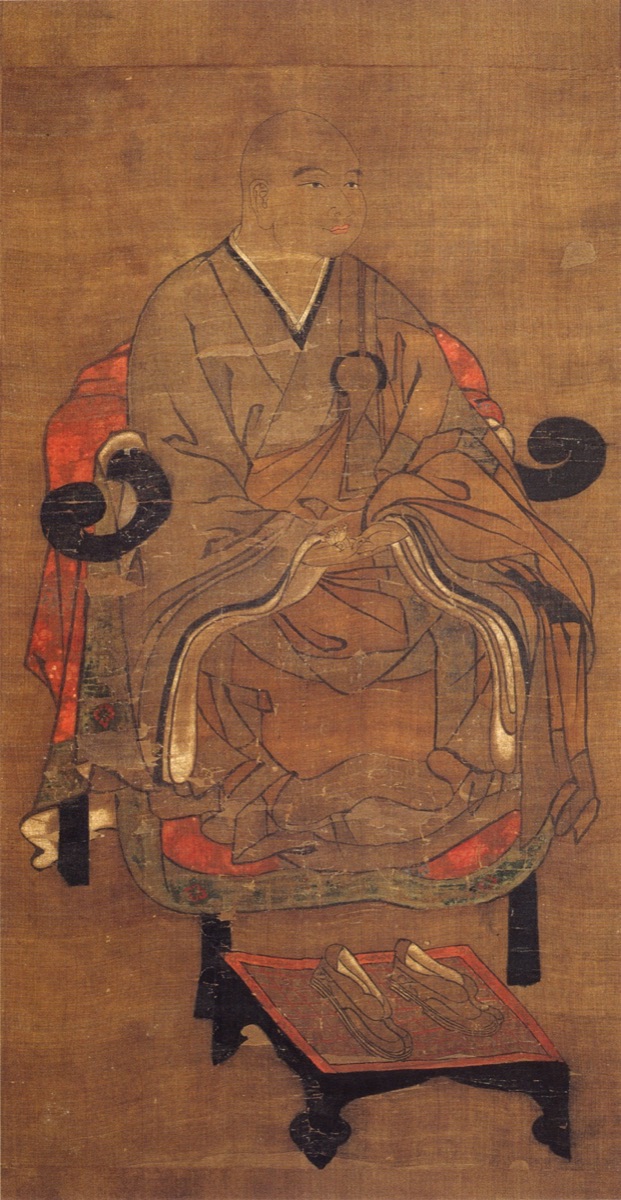
Tokimune’s life at a glance
- 1251
Born to Hōjō Tokiyori, a leader of the family’s main line.
- 1268
Becomes the eighth regent in the year a Mongol diplomatic letter reaches Japan.
- 1272
His half-brother Tokisuke is killed in the upheaval known as the February Incident.
- 1274
The first invasion, known in Japan as the Bun’ei campaign, reaches northern Kyushu.
- 1276
Stone defences are built along Hakata Bay in preparation for another attack.
- 1281
The second invasion, the Kōan campaign, fails after fighting and severe storm damage to the fleet.
- 1282
Sponsors the foundation of Engakuji with the Chinese Zen master Mugaku Sogen.
- 1284
Dies; his son Sadatoki succeeds as regent.
Why was a regent governing alongside a shogun?
The Kamakura shogunate was founded under Minamoto no Yoritomo, but later Hōjō leaders exercised power through the regency. Tokimune also headed the family’s main line, the tokusō. Holding that family position and holding the office of shikken were related but distinct sources of authority. Neither made him emperor or shogun.
Tokimune took office in 1268, supported by the experienced Hōjō Masamura. The familiar age of eighteen uses traditional Japanese age reckoning. His government also faced internal conflict: the 1272 February Incident killed his half-brother Tokisuke and other Hōjō opponents. Preparing for invasion did not suspend competition within the ruling family.
What did Tokimune do during the Mongol invasions?
Khubilai’s expanding empire brought diplomatic pressure and then warfare to Japan. The 1274 expedition involved Yuan and Goryeo forces, attacking Tsushima and Iki before reaching the Hakata area. ‘Mongol invasion’ is a useful name, but it should not hide the campaign’s multinational character or the burdens placed on the Korean peninsula.
Tokimune directed the government’s response from Kamakura; he did not personally lead a charge on a Kyushu beach. Regional warriors fought the battles. His responsibility included mobilising defence and preparing for a return. Reading a political biography alongside the invasion’s local history keeps these different roles in view.
Defence walls and the limits of the ‘divine wind’ story
In 1276, stone barriers were built along Hakata Bay. Known today as the Genkō Bōrui, their excavated remains give physical substance to the years between invasions. They were coastal defences, not a wall around all Japan. Construction and continued guard duties required labour and resources beyond the moment of battle.
In 1281, forces arriving from Korea and southern China confronted Japanese resistance, and a violent storm devastated ships around Takashima. The storm mattered, but so did fighting, preparation and the difficulties of sustaining a seaborne expedition. Evidence for this campaign should not automatically be projected back onto the different withdrawal of 1274.
Were the defenders really given no rewards?
The common claim that no warrior received any reward is too absolute. The official cultural-property description of Takezaki Suenaga’s documents records his receipt of Kaitō-gō as a reward for the first invasion. This does not show that everyone was adequately compensated. It shows why individual grants must be distinguished from the government’s wider difficulty in meeting the costs of defence.
Suenaga also appears at the centre of the Mongol Invasion Scrolls. The collection catalogue cautions that the work has missing and disordered sections and material from multiple versions. It is an extraordinary view of a warrior’s experience, not a complete, neutral visual record of every unit or of Tokimune’s decisions in Kamakura.
Engakuji: cultural exchange in a time of war
Tokimune sponsored Engakuji in 1282, with Mugaku Sogen, a Zen master from Song China, as its founding abbot. Resisting an invading government did not require rejecting all people or religious ideas from the continent. The relationship is a reminder that warfare and cultural exchange could occur within the same lifetime.
Engakuji’s own account connects its foundation with protection of the country, the spread of Zen and mourning the war dead on both sides. This is the temple’s explanation of its origins, not a quotation proving every private intention of Tokimune. Its grounds also include later rebuilding and gifts: the great bell was donated by his son Sadatoki in 1301.
What remains—and what happened after Tokimune?
Tokimune died in 1284. The shogunate continued until 1333, so an explanation that jumps straight from invasion to collapse leaves decades of history out. The wars created serious demands, but a military outcome, the distribution of burdens and the long-term survival of a government are different questions.
For a visit, Engakuji belongs to the Kamakura area, while the coastal walls are in Fukuoka and the underwater remains near Takashima are in Nagasaki Prefecture. They are not stops on a single short walk. Check each institution’s current access information; a medieval foundation date does not mean every building or reconstructed section visible today is original.
COMMON QUESTIONS
Questions about Tokimune
Was Hojo Tokimune a shogun?
No. Hōjō Tokimune was the eighth shikken, or regent, of the Kamakura shogunate. He also headed the main Hōjō family line and led the government during the Mongol invasions.
Did Tokimune personally fight the Mongols in Kyushu?
He directed the government’s defence from Kamakura. Warriors in Kyushu fought on the ground; his role should not be confused with that of a battlefield commander on the beaches.
Did a divine wind alone defeat the invasions?
A severe storm was a major factor in 1281, alongside resistance, coastal preparations and the demands of a seaborne campaign. The invasions of 1274 and 1281 should not be treated as identical events.
Did the shogunate give no rewards after the invasions?
Some rewards were given. Takezaki Suenaga’s documents provide a specific example after the first invasion. The existence of grants does not establish that compensation met every warrior’s costs.
What is Tokimune’s connection to Engakuji?
He sponsored its foundation in 1282 with Mugaku Sogen as founding abbot. The temple explains its origins through Zen devotion, protection of the country and commemoration of those killed on both sides of the invasions.
SOURCES