BIOGRAPHY / EVIDENCE & LEGEND
Sugawara no Michizane
845–903 · Scholar, poet and court statesmanSugawara no Michizane was a scholar, poet and senior official at Japan’s Heian court. Long before students prayed to him as Tenjin, a deity of learning, he worked in government and wrote in literary Chinese. His fall from office in 901 and death in Dazaifu in 903 became the starting point for a much longer history of worship, storytelling and art.
How Michizane became Tenjin ↓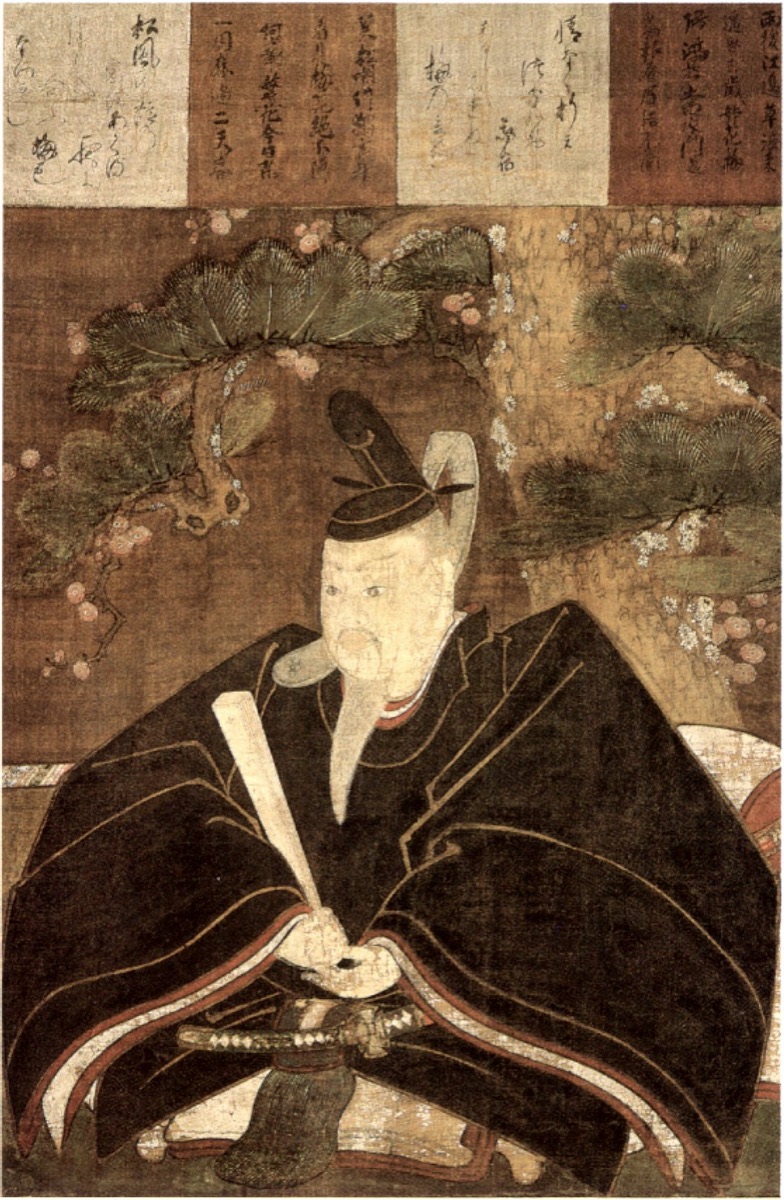
Michizane’s life at a glance
- 845
Born into a scholarly family; his father was Sugawara no Koreyoshi.
- Early career
Serves the court as a scholar of Chinese literature and history.
- 886
Becomes governor of Sanuki, in present-day Kagawa Prefecture.
- 894
Recommends cancelling a planned embassy to Tang China.
- 899
Becomes Minister of the Right, a senior position at the imperial court.
- 901
Loses his position and is sent to Dazaifu in Kyushu.
- 903
Dies without returning to the capital.
- 947
Kitano Tenmangu is founded in Kyoto, decades after his death.
A scholar in government, not a samurai
Michizane lived in the Heian period, when the imperial capital was Heian-kyō, present-day Kyoto. His world was the court, not the much later battles between Sengoku warlords. Knowledge of Chinese texts, historical precedents and formal writing was part of an official’s professional work.
He inherited a scholarly tradition from his family and held academic office before serving as governor of Sanuki. His work included poetry and the compilation of historical material in Ruijū kokushi. These were not unrelated hobbies: learning helped sustain a career in the state.
Sources: [1]
From Emperor Uda’s trust to high office
Michizane gained the trust of Emperor Uda and rose in government. In 899, during Emperor Daigo’s reign, he became Minister of the Right. Fujiwara no Tokihira was Minister of the Left. These were senior court offices, not military ranks or the equivalent of a modern elected cabinet.
His rise shows how scholarly expertise could matter politically, but expertise alone did not determine his position. Imperial support and competition among powerful families also shaped the court. The contrast between an innocent scholar and a villainous rival is central to later remembrance, but does not reveal every motive behind court decisions.
Why was the embassy to Tang China stopped?
In 894 Michizane recommended against sending a planned embassy to Tang China. Concerns about conditions in China and the dangerous crossing helped shape that decision. It is often summarised as the end of the Japanese missions to Tang, but the immediate issue was whether that particular planned mission should sail.
This was not a rejection of Chinese learning: Michizane himself wrote Chinese poetry. Nor did it end every movement of people, goods and ideas across the sea. A lecture by historian Tōno Haruyuki, published by the Imperial Household Agency, places the decision in the context of changing ways of obtaining information and maintaining contact.
What happened in Dazaifu?
In 901 Michizane was removed from the centre of government and sent to Dazaifu in northern Kyushu. Dazaifu had important administrative and diplomatic functions, but his appointment there was a demotion, not a routine opportunity for promotion. He died in 903 without returning to the capital.
Shrine histories describe false accusations and emphasise his innocence. His poetry is another important way into his final years, including the collection Kanke kōshū. Poetry can communicate grief and loyalty without being a verbatim transcript of conversations. The official, the poet and the later sacred figure need to be read together without becoming one undifferentiated story.
How did Michizane become Tenjin?
After his death, disasters were associated with his angry spirit, and his reputation was restored through honours and worship. Dazaifu Tenmangu traces its origin to his burial place. Kitano Tenmangu was founded in Kyoto in 947. These developments belong to the history of how later people understood Michizane, not to offices he held during his lifetime.
Tenjin is now particularly familiar as a deity of learning, but the tradition has been broader than examinations. Kyoto National Museum discusses connections with thunder, agriculture, poetry and relief from false accusations. Belief in a spirit’s power is historically significant; it is not proof that a spirit caused a particular disaster.
Plum trees, oxen and illustrated stories
The flying plum tree and the ox that stopped while carrying his body are traditions associated with Dazaifu Tenmangu. They explain sacred places and express devotion. Treating them as legends does not make them unimportant, but it does distinguish them from independently established events in a biography.
Illustrated Tenjin narratives added further layers of memory. Nara National Museum holds an 1896 copy by Terasaki Kōgyō of a scene from a medieval Kitano Tenjin scroll. The event depicted, the medieval model and the nineteenth-century copy have different dates. A later portrait is similarly not an eyewitness picture of Michizane.
Dazaifu and Kyoto: two different places to visit
Dazaifu Tenmangu is in Fukuoka Prefecture on Kyushu; Kitano Tenmangu is in Kyoto. They should not be treated as stops in the same local walking itinerary. The first connects with his final years and burial, while the second reveals the growth of his worship in the capital.
Use the shrines’ official information to check access and which buildings are currently available to visitors. A shrine’s foundation date does not mean every structure standing today is that old. Reading the plum and ox imagery as part of the tradition makes the visit richer without requiring belief that each story describes a literal event.
COMMON QUESTIONS
Questions about Michizane
Who was Sugawara no Michizane?
Sugawara no Michizane (845–903) was a Heian-period scholar, poet and court statesman. After exile and death in Dazaifu, he came to be worshipped as Tenjin.
Was Michizane a samurai?
No. He was a court scholar and official, not a Sengoku warrior. His life preceded the period of rival samurai warlords by many centuries.
Why do students pray to Tenjin?
Michizane’s reputation for scholarship and poetry became associated with divine support for learning. Tenjin worship also has traditions connected with thunder, agriculture and protection from injustice.
Are Dazaifu Tenmangu and Kitano Tenmangu the same shrine?
No. Dazaifu Tenmangu is in Fukuoka Prefecture on Kyushu and is associated with Michizane’s burial. Kitano Tenmangu is in Kyoto and was founded in 947.
Did cancelling the Tang embassy end contact with China?
No. Cancelling the planned state embassy in 894 did not stop all travel, trade or the exchange of knowledge. Michizane remained deeply connected to Chinese literary learning.
SOURCES