BIOGRAPHY / EVIDENCE & LEGEND
Fujiwara no Michinaga
966–1028 · Heian court statesman and imperial regentFujiwara no Michinaga became a leading figure at the Heian court through high office and close family ties to emperors. He was neither an emperor nor a shogun. His career shows how marriages, succession and the daily work of government could reinforce one another. His own diary and a surviving sutra container also reveal a person concerned with ceremony, family and Buddhist devotion.
How family relationships became political power ↓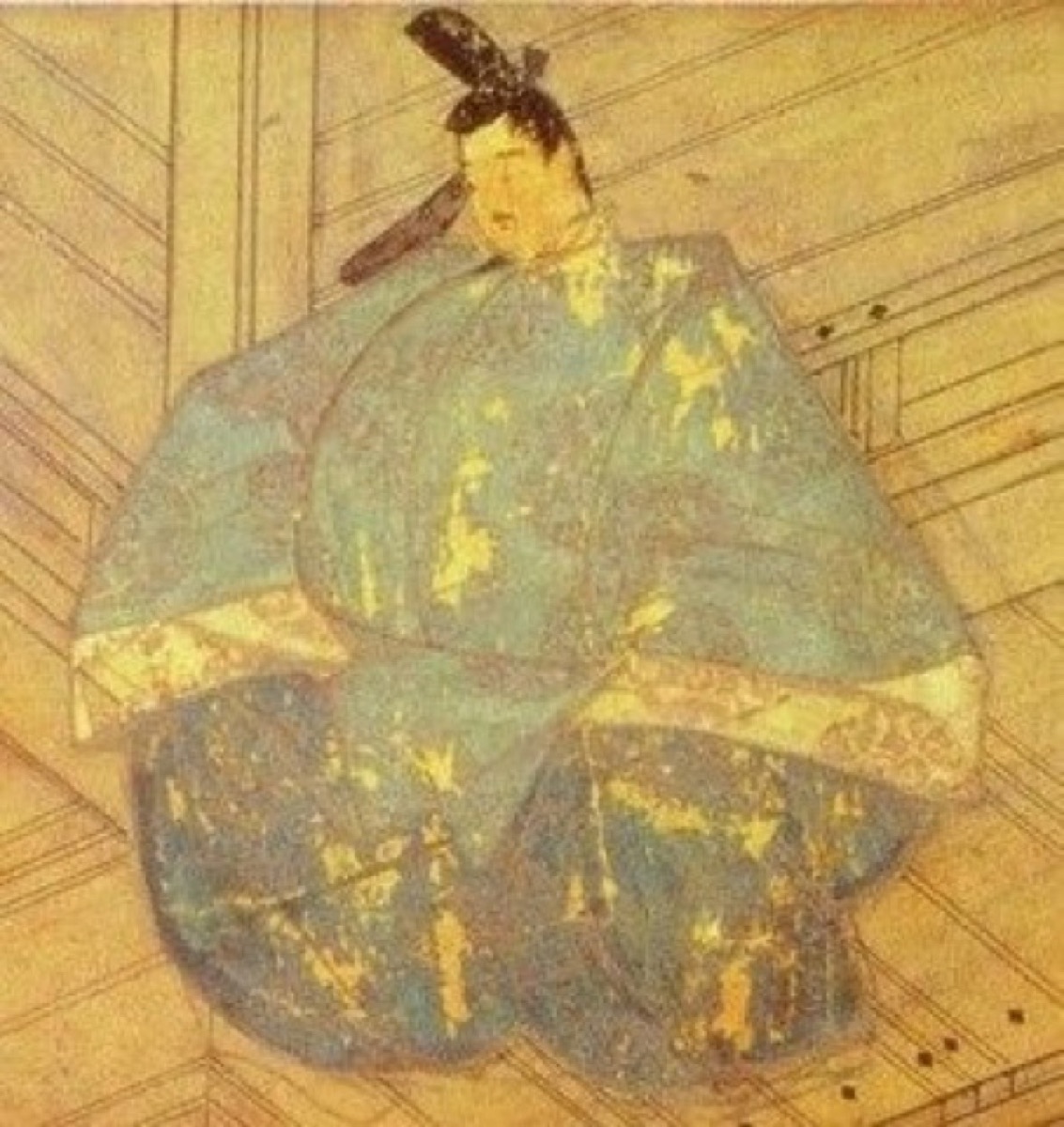
Michinaga’s life at a glance
- 966
Born into the family of Fujiwara no Kaneie.
- 995
After the deaths of his brothers Michitaka and Michikane, gains the right to review documents submitted to the emperor.
- 1000
His daughter Shōshi becomes an empress of Emperor Ichijō.
- 1007
Deposits Buddhist scriptures at Kinpusen; an inscribed sutra container survives.
- 1016
Becomes regent for his grandson, Emperor Go-Ichijō.
- 1017
Passes the regency to his son Yorimichi.
- 1018
The celebrated full-moon poem is recorded at a banquet for his daughter Ishi’s elevation as empress.
- Final years
Takes Buddhist vows and develops Hōjōji. Dies in 1028 by Western calendar conversion; many Japanese accounts give 1027.
Who was Michinaga, and how did he rise?
Michinaga lived in the Heian period, when the imperial capital was Heian-kyō, now Kyoto. This was centuries before the Sengoku wars of Nobunaga and Hideyoshi. Government centred on the emperor and court offices, and a powerful aristocrat did not need to command a samurai army to shape appointments and succession.
Being a son of Kaneie gave Michinaga important connections, but did not make his eventual dominance inevitable. His elder brothers Michitaka and Michikane held power before him. Their deaths in 995 created an opening, while his nephew Korechika remained a rival. Michinaga’s sister Senshi, the mother of Emperor Ichijō, was another important figure in the family’s relationship with the throne.
Sources: [1]
Daughters, emperors and the politics of family
His daughter Shōshi became an empress of Ichijō and the mother of the future emperors Go-Ichijō and Go-Suzaku. A daughter’s marriage and a grandson’s accession were different steps: marriage created a connection, while succession could make Michinaga the reigning emperor’s maternal grandfather. The maternal household’s role in raising and supporting an imperial child gave such relationships practical importance.
Other daughters also became empresses: Kenshi was married to Emperor Sanjō, and Ishi to Go-Ichijō. Yet marriage alone did not run the government. Offices, allies and administrative work mattered too. Nor should the women be reduced to pieces on their father’s board. Each had a household and relationships of her own, and Shōshi’s court became an important setting for literature.
Sources: [1]
Was Michinaga a kampaku?
No. Although he is often called Midō Kampaku, Michinaga did not hold the office of kampaku. A sesshō was a regent, commonly serving a child emperor; a kampaku assisted an adult emperor. These are court offices, not alternative names for a shogun. Michinaga served as sesshō after Go-Ichijō’s accession in 1016.
He had already exercised influence as Minister of the Left and as nairan, reviewing documents before they reached the emperor. In 1017 his son Yorimichi took over the regency, without erasing his father’s family connections or influence. Understanding the difference between an official title and a later name helps explain why the diary called Midō Kanpakuki does not prove he was a kampaku.
The full-moon poem and Murasaki Shikibu
At the 1018 celebration for Ishi, Michinaga is recorded comparing his fortunate world to a full moon without anything missing. The source is Shōyūki, the diary of the courtier Fujiwara no Sanesuke—not Michinaga’s own diary. The poem expresses confidence at a particular celebration; it is not a complete explanation of his personality or every political decision.
Murasaki Shikibu served his daughter Shōshi. That connection places the author of The Tale of Genji within the social world of Michinaga’s family, but does not turn the novel into his biography. Fiction, a writer’s diary and a court official’s administrative record offer different views of the same society. Their differences are part of their value as evidence.
Sources: [1]
What survives in Michinaga’s own handwriting?
Yōmei Bunko preserves fourteen volumes of his autograph diary, along with manuscript copies and related material. An autograph is writing in the author’s own hand; it is different from a later copy of the same text. The diary offers unusually direct access to court ceremonies and family events, although no diary records everything or speaks for everyone in society.
A gilt-bronze sutra container associated with his 1007 pilgrimage to Kinpusen survives in the collection of Kinpu Shrine. Buddhist scriptures were placed within it for burial. Its inscription can be read alongside the diary, bringing a material object into conversation with a written record. Devotion was not simply an activity reserved for the years after political retirement.
Hōjōji, his final years and places of memory
In later life Michinaga took Buddhist vows and devoted resources to Hōjōji. The temple expressed hopes for salvation as well as the ability of a powerful household to undertake a large building project. Its halls no longer survive. Kyoto City identifies a marker at the former site; visitors should not expect an intact Heian temple complex.
His death falls on the fourth day of the twelfth month of Manju 4. Accounts that label the traditional year as 1027 and those that convert the date to 1028 are using different calendar conventions. This article uses 1028. His family’s history continued under Yorimichi: it was the son who converted the Uji estate into Byōdōin, not Michinaga himself.
COMMON QUESTIONS
Questions about Michinaga
Who was Fujiwara no Michinaga?
Michinaga was a Heian-period court statesman whose high offices and family ties to emperors helped him dominate court politics. He was not an emperor or a shogun.
Did Michinaga become kampaku?
No. Despite the later name Midō Kampaku, he did not hold that office. He became sesshō, or regent, in 1016 and had previously exercised power through other court positions.
How was Michinaga connected to Murasaki Shikibu?
Murasaki Shikibu served his daughter, Empress Shōshi. That court connection does not make The Tale of Genji a factual biography of Michinaga.
Where is Michinaga’s full-moon poem recorded?
In Shōyūki, the diary of Fujiwara no Sanesuke, in connection with a celebration in 1018. It is not a quotation from Michinaga’s own diary.
Did Michinaga die in 1027 or 1028?
His death was on Manju 4, twelfth month, fourth day. The traditional year is often labelled 1027, while conversion of the date places it in 1028. This article uses the converted year.
SOURCES