BIOGRAPHY / EVIDENCE & LEGEND
Mōri Motonari
1497–1571 · Daimyo of western HonshuMōri Motonari turned a local warrior house in Aki, now part of Hiroshima Prefecture, into a major power in western Japan. His career combined alliances, warfare and the difficult work of keeping related families together. The famous Three Arrows story captures an ideal of unity, but a surviving letter gives a more concrete view of what he asked of his sons.
The Three Arrows: story and evidence ↓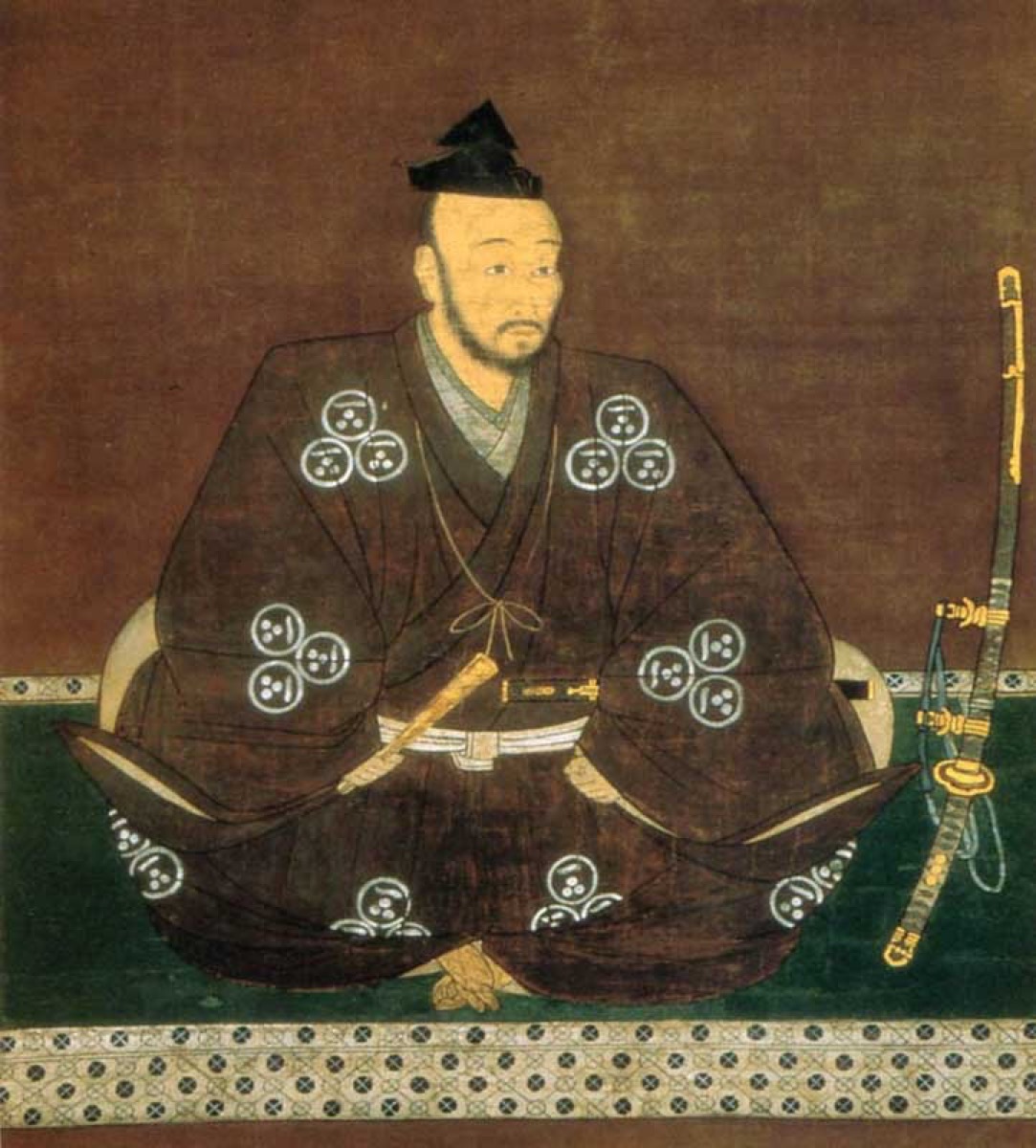
Motonari’s life at a glance
- 1497
Born the second son of Mōri Hiromoto in Aki province.
- 1523
Succeeds to leadership of the Mōri house after the deaths of his elder brother and nephew; takes Yoshida Kōriyama Castle as his base.
- 1540–1541
Defends Kōriyama against the Amago, with help from his Ōuchi allies.
- 1555
Defeats Sue Harukata at the Battle of Itsukushima, on present-day Miyajima.
- 1557
Overcomes the Ōuchi house and writes the surviving letter to his three sons.
- 1563
His eldest son Takamoto dies; grandson Terumoto succeeds to the family leadership.
- 1566
The Amago surrender, extending Mōri dominance in the region.
- 1571
Dies at Kōriyama while conflicts with rival powers remain unresolved.
From a local house to a regional power
Motonari lived during the Sengoku period, when rival warrior houses competed for territory and authority. A daimyo was a territorial lord, but the Mōri did not begin his lifetime as masters of all western Japan. They belonged to a landscape of local lords whose support and independence mattered to larger powers.
As a second son, Motonari was not the original heir. The deaths of his elder brother and then his nephew brought him to the leadership in 1523. His base was Yoshida Kōriyama Castle in present-day Akitakata, inland from Hiroshima. This is a different site from Hiroshima Castle, associated with the later generation of his grandson Terumoto.
Why alliances mattered as much as strategy
The Ōuchi, based around Yamaguchi, and the Amago, based in Izumo, competed for influence across the region. Motonari’s decisions took place within that rivalry. When the Amago attacked Kōriyama in 1540–1541, assistance from the Ōuchi helped the Mōri survive. This was not simply the victory of an isolated military genius.
Building power meant securing allies, drawing smaller lords into a wider organisation and keeping access to land and resources. His later independence grew out of these relationships. A useful question is not just how he won a battle, but why other people were willing—or compelled—to remain on his side.
Itsukushima: victory on an island
In 1555 Motonari defeated Sue Harukata at Itsukushima, the island now widely called Miyajima. Sea crossings and the island’s terrain are essential to understanding the encounter. Familiar accounts describe a night attack and an enemy drawn into a vulnerable position, but precise troop totals and dramatic conversations should not be treated as equally secure evidence.
The victory helped him take over the Ōuchi sphere of power, but acquiring territory was not the same as governing it. Rival lords and resistance within newly acquired lands remained problems. The years after the battle explain why family cooperation became a matter of political survival, not merely a pleasant moral lesson.
Did the Three Arrows story really happen?
The famous tale has Motonari show his sons that one arrow can break while a bundle of three resists. It is a later legend, not a verified eyewitness scene. There is, however, a real letter dated 1557, addressed to Mōri Takamoto, Kikkawa Motoharu and Kobayakawa Takakage. It survives in the Mōri Museum collection.
The fourteen-part letter urges cooperation. Motoharu and Takakage headed other houses, so the brothers had responsibilities beyond their shared parentage. The museum presents the document as an intervention in a difficult political situation. It should also not be imagined as a deathbed gathering: Takamoto died in 1563, before Motonari’s death in 1571.
Motonari and Terumoto are different generations
After Takamoto’s death, his son Terumoto became head of the family while Motonari remained influential. The Amago surrendered in 1566, but the family still faced rivals, including the Ōtomo. Motonari died in 1571; the future of the territory he had assembled was not guaranteed.
The later Mōri confrontation with Oda forces, accommodation with Toyotomi Hideyoshi and involvement in Sekigahara belong to the next generation. Motonari and Terumoto are not interchangeable names. Following the succession helps explain both the continuity of the house and the different choices its leaders faced.
Sources: [1]
Where to explore Motonari’s history
For his home base, start with Akitakata’s history museum and the Yoshida Kōriyama Castle site. For the island battle, use Miyajima’s official historical introduction. These are separate destinations: an itinerary around central Hiroshima alone is not a visit to Motonari’s castle.
The Mōri Museum in Hōfu, Yamaguchi Prefecture, holds family documents including the letter to his sons. Its displays rotate, so check the current exhibition before travelling to see a particular object. The later family residence housing the museum is not Motonari’s own sixteenth-century home. Official links below provide the starting points; no unrelated city tour is needed to understand these places.
COMMON QUESTIONS
Questions about Motonari
Who was Mori Motonari?
Mori Motonari (1497–1571) was a warrior lord who expanded the Mori house from Aki into a major power in western Japan through warfare, alliances and family cooperation.
Is the Three Arrows story true?
The arrow-breaking scene is a later legend. A genuine 1557 letter urging his three sons to cooperate survives, but it does not verify that dramatic scene.
Who were Motonari’s three sons in the story?
Mori Takamoto, Kikkawa Motoharu and Kobayakawa Takakage. Takamoto led the main Mori house, while his brothers headed the Kikkawa and Kobayakawa houses.
Did Mori Motonari fight at Sekigahara?
No. Motonari died in 1571, decades before the battle in 1600. His grandson Mori Terumoto was a leader of the western coalition.
SOURCES